Is Composite Decking Worth the Cost in 2026?
By Jake Jensen
Table of Contents
- Upfront Cost vs. Long-Term Savings
- Composite Decking Lifespan and Durability
- Composite Decking Maintenance Tips and Annual Upkeep
- Trex Decking Installation Cost and Labor Breakdown
- Return on Investment: Resale Value and Home Equity
- Hidden Costs and What Homeowners Miss
- Is Composite Decking Right for Your Climate?
- Conclusion: Making the Decision
- Frequently Asked Questions
Last Updated: September 25, 2026
Upfront Cost vs. Long-Term Savings
Composite decking costs more upfront than traditional alternatives. The real question is composite decking worth the cost in 2026, and whether the long-term benefits justify that initial investment.
Here's the tension: you pay more today to save money tomorrow. Composite materials resist rot, fading, and splintering without the annual maintenance traditional materials demand. Over 20-25 years, those savings compound. Many homeowners find that the reduced maintenance costs and extended lifespan make composite decking worth the cost in 2026, especially in climates with harsh freeze-thaw cycles.
At Next Level Exteriors, we've built hundreds of composite decks across the Wasatch Front. The homeowners who see the strongest return are those planning to stay in their homes long-term. If you're building for the next decade or more, composite makes financial sense.
Composite Decking Lifespan and Durability
Composite decking lasts 25-30 years with minimal intervention.
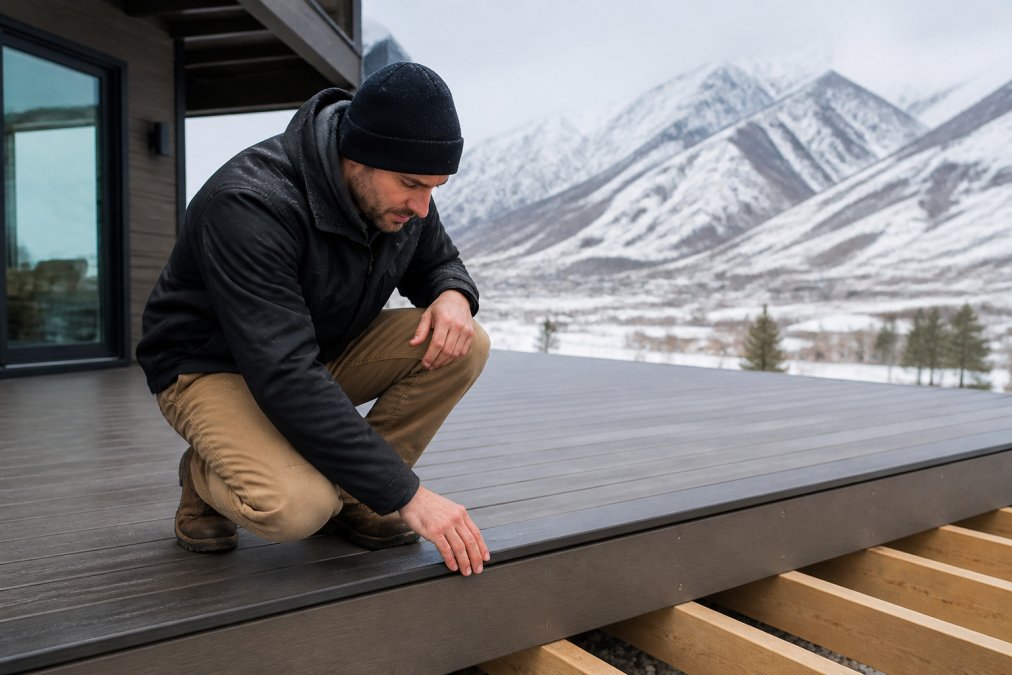
The durability advantage comes from the material's composition. Composite blends wood fibers with plastic polymers, creating a surface that resists the primary enemies of traditional decks: moisture absorption, UV damage, and rot. In Utah's freeze-thaw environment, where water infiltrates wood and expands during winter, composite's impermeability is a genuine advantage.
Real-world performance data shows composite decks maintain structural integrity through decades of snow load cycles. The material doesn't weaken the way wood does. Fasteners and substructure matter more than the surface material itself, which is why professional engineering for local snow loads is critical. Next Level Exteriors designs every deck to handle the specific structural demands of the Wasatch Front, ensuring your composite investment performs as promised.
One honest limitation: composite can fade slightly over 5-10 years, especially in direct sunlight. Modern capstock technology (a protective outer layer) has reduced this significantly, but it's not zero. The deck remains fully functional and structurally sound, the color shift is purely aesthetic.
Composite Decking Maintenance Tips and Annual Upkeep
Composite decking maintenance is straightforward and inexpensive.
The annual routine is simple:
- Sweep debris and remove standing water
- Clean with mild soap and water (no pressure washing above 1,500 PSI)
- Check fasteners and substructure for any movement
- Inspect for mold or mildew in shaded areas (rare, but possible in humid climates)
Composite doesn't require staining, sealing, or sanding. You won't refinish it every 2-3 years the way you would with wood. This is where the cost-of-ownership advantage becomes visible.
Mildew can develop in shaded, damp areas. It's cosmetic, not structural, and washes away easily with a mild bleach solution. In the dry Utah climate, this is less common than in humid regions, but it's worth knowing.
Trex Decking Installation Cost and Labor Breakdown
Trex composite decking installation requires precision and proper technique. The installation process differs from traditional lumber in ways that affect both cost and quality.
Composite materials require fastening systems designed for plastic expansion. Trex Pro Certified installers, like the team at Next Level Exteriors, understand these technical requirements. Improper fastening can lead to fastener pop-up, surface damage, and warranty issues down the line.
This includes site prep, substructure installation, composite board installation, railing systems, and finishing details. Professional installation ensures proper slope for drainage, correct fastener spacing, and structural compliance with local building codes.
Custom engineering for Utah snow loads adds another layer of precision. Standard decks aren't enough in the Wasatch Front. Your deck's substructure must account for the weight of accumulated snow and ice. Next Level Exteriors personally quotes every project and oversees installation from start to finish, ensuring your composite deck is built to withstand regional winters.
Return on Investment: Resale Value and Home Equity
A well-built composite deck adds measurable value to your home, though the return depends heavily on regional market conditions and how long you own the property. Outdoor living spaces contribute positively to property appraisal, but the multiplier varies significantly by geography and buyer demographics.
Resale Value: The Regional Picture
A composite deck positioned as a premium, low-maintenance outdoor living space performs better at resale than a basic structure. Buyers recognize that composite requires minimal upkeep, which appeals to those planning long-term ownership. The durability messaging, "built to last 25+ years", resonates with buyers seeking to avoid future renovation costs.
The Break-Even Timeline for Resale Scenarios
Living Benefit vs. Resale Benefit
The strongest financial case for composite decking is not resale value, it's the compound benefit of reduced maintenance labor and extended usable life during ownership. The resale value is a bonus, not the primary return.
For homeowners in harsh climates (freeze-thaw cycles, heavy snow, intense UV), the durability advantage is especially pronounced. A composite deck that performs reliably for 25 years in a freeze-thaw environment eliminates the mid-life replacement cycle that traditional materials require.
Market-Specific Considerations
In markets where composite decking is common and well-understood by appraisers, resale value recognition is stronger. In markets where composite is still emerging, appraisers may not fully account for the durability premium, and resale recovery may be lower. This is shifting as composite becomes mainstream, but it remains a regional variable worth researching before committing to a large deck project.
The decision to invest in composite should prioritize your own use and enjoyment over speculative resale gains. If you're building a deck you'll use and enjoy for a decade or more, the math works.
Hidden Costs and What Homeowners Miss
Several costs hide beneath the surface-level price of composite decking. Understanding these prevents financial surprises.
Permits and engineering: Custom-engineered decks for snow loads require structural permits. This adds time and cost but is non-negotiable for safety and code compliance in the Wasatch Front.
Substructure investment: The foundation matters more than the surface material. Posts, beams, and joists must be properly spaced and sized for your climate. Cutting corners here creates problems that no composite surface can fix.
Fastening systems: Composite requires stainless steel or composite-compatible fasteners. These cost more than standard deck screws, but they prevent corrosion and fastener pop-up.
Railing systems: Building code requires railings on decks over 30 inches high. Quality railings add significant cost, but they're mandatory and essential for safety.
Site preparation: Removing old structures, grading, and preparing the substructure foundation take time and money. This is often underestimated in initial quotes.
Next Level Exteriors handles permits, HOA approvals, and structural engineering as part of the process. There are no surprise change orders. You know the full scope upfront, and the owner personally walks every job to ensure quality.
Is Composite Decking Right for Your Climate?
Climate determines whether composite decking makes financial sense. Utah's freeze-thaw cycles, heavy snow loads, and intense UV exposure create specific demands that composite addresses well.
In the Wasatch Front, composite's resistance to moisture absorption is a genuine advantage. Winter snow melts, refreezes, and stresses wood fibers through expansion cycles. Composite's impermeability eliminates that damage mechanism. Over 20 years, this advantage compounds.
The dry Utah climate also reduces mold and mildew risk. Composite performs better in humid climates too, but the advantage is less dramatic where moisture is constant. In Utah, you get the benefit without the downside.
Heavy snow loads require structural engineering regardless of surface material. Next Level Exteriors designs composite decks to handle the specific snow load requirements of your location, whether you're in Salt Lake County, Utah County, or the surrounding Wasatch Front communities. The deck's engineering matters more than the surface material.
UV exposure is intense at elevation. Composite's capstock technology protects against fading better than bare wood, which grays and weathers quickly in high-altitude sunlight. Over 25 years, the aesthetic difference is substantial.
Conclusion: Making the Decision
Is composite decking worth the cost in 2026? For homeowners in the Wasatch Front planning to stay in their homes long-term, the answer is yes. The combination of durability, low maintenance, and performance in Utah's climate creates genuine financial and lifestyle benefits.
The decision hinges on three factors: your timeline (how long you'll own the home), your climate (freeze-thaw cycles and snow loads), and your maintenance tolerance (how much work you want to do annually).
If you're building a deck that will serve your family for 20+ years in a harsh climate, composite is worth the upfront investment.
Next Level Exteriors specializes in custom-engineered composite decks built to withstand Utah winters. The team handles permits, HOA requirements, structural design, and professional installation, with the owner personally involved in every project. No commissioned salesmen, no surprise change orders, no pressure. Just transparent quotes, expert engineering, and decks built to last.
Frequently Asked Questions
What is the main advantage of composite decking over pressure-treated lumber?
Composite decking requires significantly less maintenance. You won't need annual staining, sealing, or sanding. Composite materials resist rot, UV fading, and moisture absorption, which means lower long-term maintenance costs and fewer repairs. The trade-off is a higher upfront investment, but the durability and reduced upkeep often make it worthwhile over 20+ years.
How long does composite decking actually last?
Quality composite decking typically lasts 25-30 years or more with proper care. The lifespan depends on material quality, climate exposure, and maintenance. In harsh climates with heavy snow loads or intense UV exposure, premium composites with capstock protection perform better and last longer than budget options. Regular cleaning and minor maintenance can extend the life of your composite deck significantly.
What are the hidden costs of composite decking installation?
Beyond material and labor, homeowners often overlook substructure upgrades, fastener systems, and permit costs. If your existing foundation isn't strong enough, reinforcement adds expense. Composite also requires specific fastening systems designed for the material. HOA approvals, engineering for snow loads, and site preparation can add to the total project budget. Getting a detailed quote that itemizes these costs helps avoid surprises.
Will a composite deck increase my home's resale value?
Composite decks improve curb appeal and attract buyers, but the resale value gain typically doesn't equal the full installation cost. The real value lies in years of enjoyment, reduced maintenance stress, and structural integrity. In competitive markets with strict HOA requirements, a well-built composite deck can be a meaningful selling point.
Ready to build a composite deck that performs in Utah's climate? Contact Next Level Exteriors for a transparent quote. The owner will personally assess your project, handle all engineering and permits, and ensure your deck is built right the first time. Your deck should outlast your mortgage, let's make sure it does.
Plan your project with Jake
Share your project type, location, scope and timing. Jake confirms an on-site estimate after your callback.