
How to Clean Composite Decking Without Damage
By Jake Jensen
Table of Contents
- What You'll Need Before You Start
- Routine Cleaning and Maintenance for Composite Decking
- Best Cleaner for Composite Decking
- How to Remove Stains from Composite Decking
- Pressure Washing Composite Decking Safely
- Common Cleaning Mistakes to Avoid
- Seasonal Cleaning Schedule and Prevention
- Frequently Asked Questions
Last Updated: October 13, 2026
What You'll Need Before You Start
To clean composite decking properly, start with simple supplies from home, no expensive equipment or harsh chemicals needed.
Here's what to have on hand:
- Soft-bristle brush or nylon scrub brush
- Soft sponge or microfiber cloth
- Mild dish soap or detergent
Avoid pressure washers, steel brushes, and bleach, they damage composite surfaces and void warranties. Stick with gentle, proven methods.
Routine Cleaning and Maintenance for Composite Decking
Regular maintenance keeps your clean composite decking looking new and prevents stain-causing buildup. A simple monthly routine prevents 90% of common problems: remove dirt, debris, and spills before they set in.
Step 1: Remove Debris and Dirt
Sweep away leaves, twigs, and dirt with a soft broom or leaf blower, then clear the gaps between boards, trapped debris holds moisture and causes mold.
This takes 5-10 minutes and makes the rest of the cleaning far more effective.
Step 2: Apply Mild Soap and Water Solution
Mix warm water with mild dish soap, roughly one tablespoon per gallon. Pour or spray it across the deck and let it sit a few minutes to loosen dirt. This gentle approach works on most composite decking without risk of damage.
Step 3: Scrub with a Soft-Bristle Brush
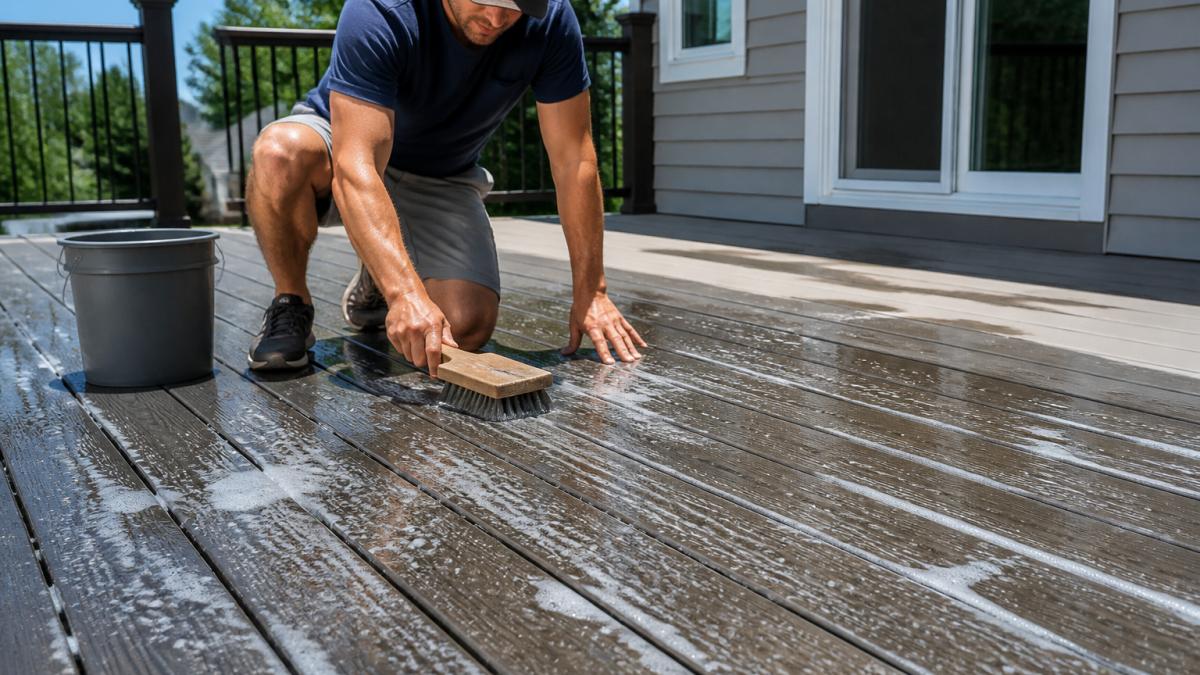
Work the soap solution in with a soft-bristle or nylon scrub brush, scrubbing in the direction of the boards with moderate pressure. Give extra attention to high-traffic areas like entryways and seating areas.
Step 4: Rinse Thoroughly
Rinse away all soap residue with a garden hose on a gentle spray, starting at the high end and working downward. Rinse until the water runs clear, leftover soap leaves a film that attracts dirt, then let the deck air dry completely.
Best Cleaner for Composite Decking
The right cleaner keeps your deck pristine; the wrong one damages the surface.
Recommended Cleaning Supplies and Tools
Mild Soap and Water, your go-to for routine cleaning. Safe, effective, and inexpensive.
Oxygenated Cleaner, for tougher stains, an oxygen-based (not chlorine) cleaner lifts stubborn marks without harming the composite.
Soft-Bristle Brush, a nylon or soft-bristle brush cleans without gouging the surface.
Microfiber Cloth or Soft Sponge, gentler than brushes for spot cleaning and tight spaces.
What to Avoid
Never use chlorine bleach, even diluted, it fades and weakens composite decking and harms nearby plants.
Steel brushes and abrasive scrubbers scratch the deck, and scratched areas trap dirt and stain easily.
Harsh chemicals, acetone, and paint thinner dissolve or discolor composite. Stick with gentle, water-based solutions.
How to Remove Stains from Composite Decking
Composite boards resist moisture and rot, but they are not stain-proof. The surface is a capped polymer shell, and how you treat a stain depends on whether the mark sits on top of that cap or has worked into it. Match the method to the stain type, and always test on a hidden area first.
A few ground rules apply to every stain below:
- Work top-down and rinse between attempts so you can see what actually lifted.
- Use a soft-bristle nylon brush or a microfiber cloth, never a wire brush or abrasive pad.
- Give the cleaner its full dwell time. Most failures come from scrubbing harder instead of waiting longer.
Grease, Oil, and Food Spills
For fresh grease, sprinkle an absorbent powder such as cornstarch or baking soda over the spot, let it sit 10-15 minutes, then brush it away.
For set-in grease, apply an oxygenated cleaner and let it dwell 15-30 minutes before scrubbing. Oxygen cleaners break the stain down chemically rather than relying on abrasion.
Mold and Mildew
Mold and mildew show up as dark speckling or streaking, usually on shaded boards, under planters, or near downspouts.
Mix one part white vinegar to three parts water in a spray bottle.
For heavier growth, switch to an oxygenated cleaner and extend the dwell time to 30-45 minutes.
Rust Marks
Rust stains usually come from metal furniture feet, grill legs, or a steel planter left in place.
Start with the gentlest option: a paste of baking soda and water, applied with a soft cloth and light pressure.
Prevention is easier: put rubber or plastic glides under metal furniture legs and set planters on a plastic saucer rather than directly on the boards.
Tannin Stains from Leaves and Acorns
Tannins leave brown or tea-colored blotches, often in the shape of a leaf or a pile of debris that sat through a rain.
An oxygenated cleaner is the right tool. Apply it, let it dwell 45-60 minutes, scrub gently, and rinse.
The real fix is prevention: sweep leaves and acorns off the deck before rain, and clear debris from between boards so moisture does not hold the tannins against the surface.
Paint, Caulk, and Construction Residue
Paint drips, caulk smears, and adhesive residue are mechanical problems, not chemical stains. Do not attack them with solvent on a composite cap.
For fresh latex paint, wipe with a damp cloth while it is still soft. Once cured, a plastic scraper used at a shallow angle can lift a drip without gouging the board.
When to Stop
If a stain has not lifted after two or three properly executed attempts with the correct product and full dwell time, stop. Continuing to scrub or escalating to stronger chemicals risks permanent damage to the cap, which cannot be cleaned back to its original appearance.
Pressure Washing Composite Decking Safely
Pressure washing has a place in deck maintenance, but only when done correctly. Most homeowners should avoid it entirely, gentle methods work just as well without risk.
When Pressure Washing Makes Sense
Pressure washing is useful only for heavy buildup that mild soap won't remove. Think years of accumulated grime in areas with poor drainage, not routine cleaning.
If you do pressure wash, use extreme caution. The wrong technique causes permanent damage that no amount of cleaning can fix.
Safe Pressure Washing Technique
If pressure washing becomes necessary, follow these rules strictly:
- Use only 1,500 PSI maximum. Anything higher damages composite material.
- Keep the nozzle at least 12 inches from the surface. Angle it away from the deck boards.
- Use a wide fan-tip nozzle, never a concentrated jet.
Most composite manufacturers recommend against pressure washing entirely. Check your deck's care instructions before attempting it.
Common Cleaning Mistakes to Avoid
Scrubbing too hard, Aggressive scrubbing damages the protective surface.
Ignoring spills, Fresh spills clean easily.
Pressure washing without caution, High pressure creates gouges and permanent damage.
Mixing cleaners, Never combine different cleaning products.
Cleaning in direct sun, Solutions dry too quickly and leave streaks.
Seasonal Cleaning Schedule and Prevention
A composite deck rewards consistency more than effort. A short routine repeated through the year prevents the buildup that turns into stubborn stains. Adjust the schedule below for your climate, tree cover, and how heavily the deck is used.
| Season | Primary Tasks | Frequency |
|---|---|---|
| Spring | Clear winter debris, inspect for mold in shaded areas, full mild-soap wash | Once, plus spot cleaning |
| Summer | Gentle wash, prompt spill cleanup, check drainage and gaps | Monthly |
| Fall | Remove leaves and acorns before rain, pre-winter deep clean | Every 1-2 weeks during leaf drop |
| Winter | Sweep snow and debris, avoid salt-based ice melt, keep drainage clear | As needed after storms |
Prevention Habits That Do the Most Work
Most cleaning problems start with something sitting on the surface too long. These habits prevent the majority of stains:
- Sweep between boards, not just across them. Debris trapped in the gaps holds moisture against the surface and feeds mold. A soft brush or a leaf blower on low setting clears it quickly.
- Move planters and furniture periodically. Anything left in one spot for months traps moisture and creates shadowed, discolored patches. Shift items a few inches every few weeks.
- Use glides under metal legs. Rubber or plastic feet prevent rust transfer and reduce scuffing.
A Simple Decision Guide: Hand Clean or Escalate
Use this quick check before reaching for a stronger method:
- Light dust, pollen, or a few footprints, sweep or rinse with a garden hose. No soap needed.
- General grime or a dull film, mild dish soap and warm water, soft brush, rinse. This handles the large majority of routine cleaning.
- A specific stain you can identify, go to the stain-specific method rather than scrubbing harder with soap.
- Heavy, widespread buildup after long neglect, an oxygenated cleaner with a full dwell time, applied in sections so it does not dry on the surface.
- Only if the above fail and the buildup is extreme, consider pressure washing as a last resort, following the pressure and technique limits above. Most manufacturers discourage it, and gentle methods almost always work.
Troubleshooting Common Cleaning Problems
Here is what to do when careful cleaning goes sideways:
Streaks or a hazy film after drying. Almost always dried soap or cleaner residue. Re-rinse with clean water, working from the top of the deck downward, and avoid cleaning in direct sun so the solution does not dry before you rinse it.
White or chalky residue in the gaps. Soap and dirt collect in the board gaps and dry there.
A spot that will not lift after two or three tries. Stop cleaning.
Scratches or gouges appearing. These come from abrasive tools, metal scrapers, or high-pressure spray.
A Note on Board Age and Finish
Composite formulations and surface finishes vary by manufacturer and product generation. Some boards have a protective cap with a specific care recommendation; others have a brushed or variegated finish that shows residue differently. Before applying any method in this guide for the first time, check the care instructions that came with your boards or look them up by manufacturer.
Frequently Asked Questions
What cleans composite decking best?
Mild soap and warm water is the safest and most effective for routine cleaning of composite decking. Mix a few drops of dishwashing detergent with warm water, apply with a soft-bristle brush, and rinse thoroughly. For stubborn stains, an oxygenated cleaner designed for composite surfaces works well without damaging the material. Always check your deck board manufacturer's care instructions first, they often recommend specific products that won't void your warranty.
Can you use a pressure washer on composite decking?
Pressure washing is possible but requires caution. Use a pressure washer set to no more than 1,500 PSI with a fan-tip nozzle, and keep the nozzle at least 12 inches from the deck surface. Never use a concentrated jet, as it can damage the composite material and create gouges or discoloration. Hand cleaning with a soft brush is safer for routine maintenance. Reserve pressure washing only for heavy buildup after confirming your deck manufacturer approves this method.
How do you remove stains from composite decking?
The method depends on the stain type. Food and drink spills should be cleaned immediately with mild soap and water. Mold or mildew requires a solution of one part white vinegar to three parts water, applied with a soft brush. For stubborn discoloration, an oxygenated cleaner works effectively. Always test any cleaning solution on a hidden area first, scrub gently with a soft-bristle or nylon brush, and rinse thoroughly with clean water to prevent residue buildup.
What can damage composite decking during cleaning?
Avoid chlorine bleach, which can discolor composite boards and harm nearby plants and landscaping. High-pressure washers above 1,500 PSI can gouge or scar the surface. Stiff-bristled brushes or steel wool can scratch the deck finish. Never use abrasive cleaners or solvents. Don't let cleaning solutions sit too long on the surface, as prolonged exposure can cause staining. Always follow the deck board manufacturer's care instructions to protect your warranty and ensure long-term durability.
Plan your project with Jake
Share your project type, location, scope and timing. Jake confirms an on-site estimate after your callback.