Custom Pergola vs Kit Pergola: Pros and Costs
By Jake Jensen
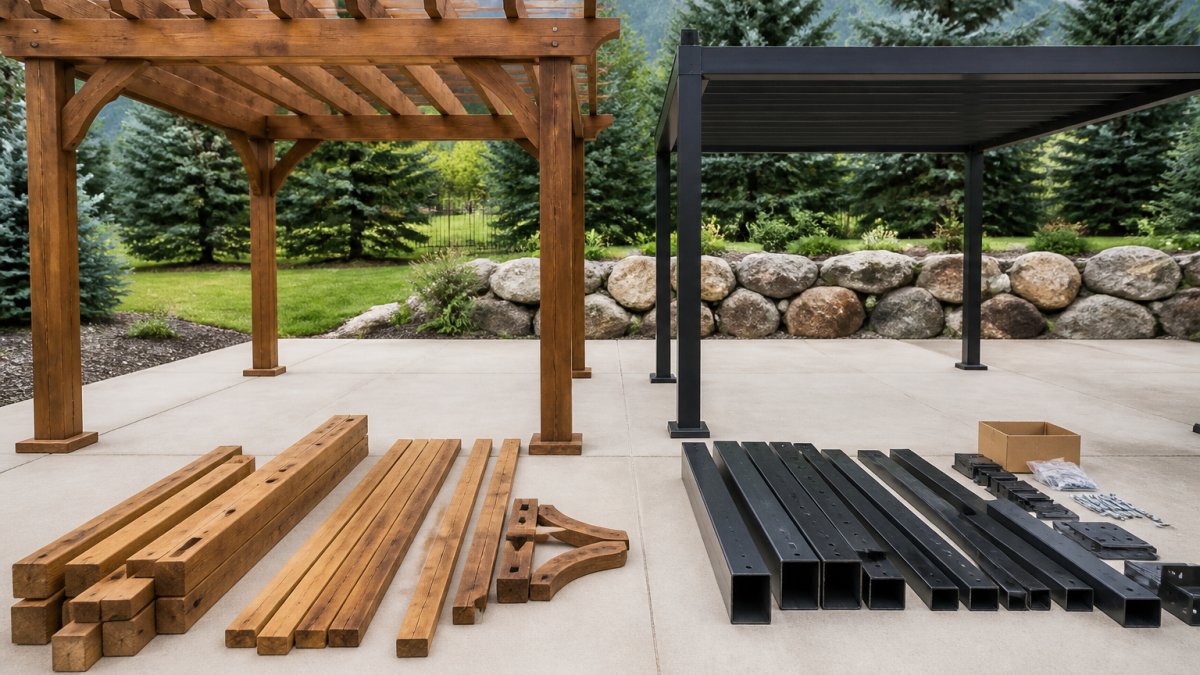
Table of Contents
- Custom Pergola vs Kit Pergola: What's the Real Difference
- Upfront Costs and Total Project Investment
- Installation Time and Project Complexity
- Pergola Material Durability and Long-Term Performance
- Pergola Installation Cost: What You're Actually Paying For
- Hiring a Professional Pergola Builder vs DIY Assembly
- Design Flexibility, Customization, and Site-Specific Fit
- Which Option Should You Choose
- Frequently Asked Questions
Last Updated: October 19, 2026
Custom Pergola vs Kit Pergola: What's the Real Difference
When you're ready to add a pergola to your outdoor space, you'll face a fundamental choice: buy a kit or commission a custom build. At Next Level Exteriors, we've guided hundreds of homeowners through this exact decision, and the answer depends far more on your specific situation than on price alone.
A custom pergola vs kit pergola comparison isn't about one being universally better, it's about matching the right solution to your site, your timeline, and what you actually need the structure to do. Kit pergolas arrive pre-engineered and pre-cut, ready for assembly. Custom pergolas are designed and built specifically for your property, accounting for your exact dimensions, local building codes, snow loads, and aesthetic goals.
The gap between these two approaches shows up in three places: upfront cost, installation speed, and how well the final structure fits your home and site conditions. Here's what you need to know before deciding.
Upfront Costs and Total Project Investment
The sticker price on a kit pergola looks attractive. Pre-built aluminum pergola kits, while cedar or vinyl kits can also be found. Those numbers feel manageable when you're browsing online.
But the sticker price is not the project price. The only fair comparison is total installed cost for the same size, material, and site, and that means building the number line by line instead of comparing a kit box to a custom bid.
The line items that decide the real number
Use this checklist to price a kit and a custom build on equal footing. Fill in each line for both options before you decide.
| Cost line | Kit pergola | Custom pergola |
|---|---|---|
| Structure / materials | Kit price as listed | Design, engineering, and material quote |
| Footings and foundation | Often not included; post bases or anchors sold separately | Engineered footing design and excavation included |
| Delivery and freight | Freight surcharge common on long kits | Included in most build quotes |
| Tools and equipment | You supply or rent (ladders, drivers, saws, lifts) | Crew supplies |
| Labor | DIY time or contractor assembly | Design, permitting, and installation labor |
| Permits and plan review | Usually your responsibility | Typically coordinated by the builder |
| HOA submission | Your responsibility | Typically coordinated by the builder |
| Finishing and sealing | Extra for cedar; ongoing | Specified in the quote |
| Repairs and replacement parts | Sourced by you | Covered under warranty terms |
Two patterns show up again and again. First, the kit's advertised price usually excludes footings, delivery, and finishing, the three lines that most often surprise DIY buyers. Second, a custom quote bundles design, permitting, and installation, so the gap between the two totals is almost always smaller than the gap between the two headline prices.
Where the money actually goes
If you hire a contractor to assemble a kit, labor costs vary depending on complexity and local rates. If you do it yourself, you are trading money for time, and assembly errors become expensive to fix later, especially when a mis-set post means re-pouring a footing.
Custom pergolas carry higher design and engineering costs built in from the start. A professional builder evaluates your site, handles permit requirements, manages HOA approvals, and designs the structure to handle local climate demands. In regions with heavy snow loads, that engineering isn't optional, it's essential, and it is a line item you can see in the quote rather than a hidden risk.
The real comparison isn't kit price versus custom price. It's the total cost of ownership: kit purchase plus footings plus delivery plus assembly labor (or your own time) plus potential repairs versus custom design, professional installation, and a structure engineered to last decades without major issues. Price the whole line, not the box.
Installation Time and Project Complexity
Kit pergolas promise speed. Most can be assembled in a weekend or two if you're handy and have help. Pre-cut components and standardized hardware mean fewer decisions on-site.
That speed assumes your site cooperates. If your patio is level, your dimensions match standard kit sizes, and you don't need to account for unusual site conditions, assembly moves quickly.
Custom builds take longer upfront. Design, permitting, and material ordering add weeks to the timeline. But once construction starts, a professional crew typically completes the work in 1-2 weeks, depending on complexity.
For homeowners in areas with strict building codes or HOA requirements, the permitting process alone often makes a kit impractical. You'll need professional documentation and engineer sign-off anyway, which means you're paying for custom work regardless.
Pergola Material Durability and Long-Term Performance
Kit pergolas typically come in aluminum, cedar, or vinyl. Aluminum resists weather and requires minimal maintenance. Cedar offers natural aesthetics but needs regular staining and sealing. Vinyl is durable but can look plastic-like to some homeowners.
The durability question depends partly on material choice and partly on whether the structure was engineered for your specific climate.
Custom pergolas can be engineered for local climate demands. A builder familiar with regional weather patterns, heavy snow, wind exposure, or intense UV, designs the structure with appropriate materials, fastening systems, and load capacity.
Professional builders often use materials like composite or premium aluminum specifically chosen for durability in challenging climates. That choice is informed by experience with what actually holds up in your area, not by what works in a generic installation manual.
Pergola Installation Cost: What You're Actually Paying For
When you hire someone to assemble a kit pergola, you're paying for labor, with costs varying depending on complexity and local rates. That is a transactional scope: the installer puts together pre-made pieces and leaves.
When you hire a professional for a custom pergola, that cost covers multiple services: site evaluation, design consultation, permit and HOA coordination, material sourcing, professional installation, and warranty support. It's a more comprehensive service, and the cost reflects that scope. The key difference is that custom installation is consultative, the builder is solving a specific problem for your property, not just assembling a product.
The approval layer most cost comparisons skip
Permits, zoning, setbacks, and HOA approval are the decision factors that rarely appear in kit-versus-custom price comparisons, yet they can change which option is even viable. A few practical rules of thumb:
- Setbacks and lot coverage. Many jurisdictions limit how close a structure can sit to a property line and how much of the lot it can cover. A standard kit footprint may not fit inside those limits; a custom design can be sized to comply.
- Height limits. Pergola height is often capped by local code or HOA rules. A kit's fixed height may exceed the cap, while a custom design can be engineered to the allowed maximum.
- Attachment and anchoring. A pergola attached to a house usually triggers different structural and permit requirements than a freestanding one. Know which you're building before you price either option.
- HOA architectural review. Many HOAs require submittal drawings, material samples, and color approvals. A kit may not come with the documentation the review board wants; a custom builder typically supplies it.
Climate and site engineering: when a kit stops being suitable
Exposure, snow load, soil, and anchoring decide whether a standard kit is adequate or a custom design is required. Ask these questions about your site:
- Snow load. Does your region carry a design snow load that a standard kit's span and connections were not rated for? If yes, the kit may need engineering it doesn't include.
- Wind exposure. Is the site open and exposed, or sheltered? Uplift and lateral bracing requirements rise with exposure.
- Soil and frost. What is the soil type, and how deep does frost penetrate? Footing depth and post anchoring depend on both, and a kit's generic post base may not satisfy local requirements.
- Attachment to the house. If the pergola ties into a wall or roof line, the connection detail matters as much as the pergola itself.
This matters when things go wrong. If a kit pergola has structural issues two years later, you're often on your own. If a custom pergola fails, the builder typically stands behind the work with a warranty and will address problems. That warranty is part of what the higher installation cost buys, and it is the part a kit receipt rarely includes.
Hiring a Professional Pergola Builder vs DIY Assembly
DIY assembly works if you're comfortable with basic carpentry, have the right tools, and your site cooperates. For straightforward projects on level ground with standard dimensions, a kit can be a genuinely satisfying weekend project.
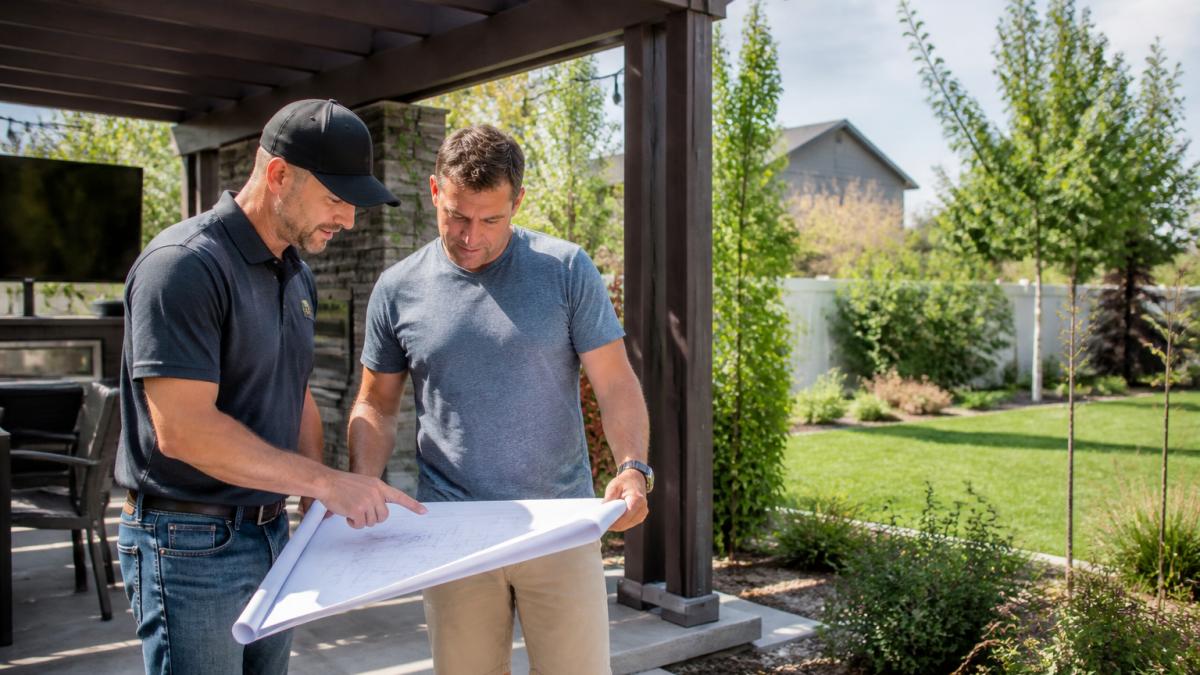
But DIY assembly often underestimates hidden complexity.
A professional pergola builder brings site-specific expertise. They know local building code requirements, understand how your soil and climate affect foundation design, and can spot problems before they become expensive.
For homeowners in the Wasatch Front, working with a local builder who understands regional snow loads and freeze-thaw cycles is especially valuable.
Design Flexibility, Customization, and Site-Specific Fit
Kit pergolas come in standard sizes and configurations. You choose from available options, and the structure is built to those specifications.
Custom pergolas are designed around your space. Unusual lot shapes, sloped terrain, existing structures, and specific aesthetic preferences all inform the design. You get a pergola that fits your property, not a pergola that your property has to accommodate.
This flexibility extends to material choices, finish details, and integration with existing outdoor features. A custom builder can match your home's architectural style, coordinate with existing landscaping, and solve site-specific challenges like drainage or wind exposure.
For homeowners with strict HOA requirements or unusual site conditions, customization isn't a luxury, it's necessary. A kit pergola might violate setback rules or look out of place. A custom design ensures compliance and aesthetic harmony.
Which Option Should You Choose
Choose a kit pergola if your site is straightforward, your dimensions are standard, you're comfortable with DIY assembly or willing to hire a contractor for basic installation, and you want to minimize upfront costs. Kits work well for simple projects on level ground with no special engineering requirements.
For most homeowners in areas with complex building requirements or challenging climate conditions, a custom pergola delivers better long-term value. The upfront investment is higher, but you're paying for expertise, compliance, durability, and peace of mind, not just materials.
If you're ready to explore custom pergola options designed specifically for your property and engineered for Utah winters, Next Level Exteriors provides transparent quotes within 48 hours with no commissioned salesmen or pressure. We handle permits, HOA coordination, and site engineering so you don't have to.
Frequently Asked Questions
Is it cheaper to build a custom pergola or buy a kit?
Kit pergolas have lower upfront material costs. Custom pergolas involve professional labor, design, and site-specific engineering, making total project costs higher. However, custom builds account for local conditions like snow loads and HOA requirements, which can prevent costly mistakes. The real comparison depends on your site conditions, customization needs, and whether you're factoring in your own labor time for assembly.
What pergola material durability should I expect?
Aluminum kit pergolas resist rust and weather damage with minimal maintenance. Vinyl kits require more upkeep. Custom pergolas engineered for regional climate conditions, like Utah's heavy snow loads, use materials and structural design matched to your specific environment, often extending durability. Trex composite materials used in professional installations resist rot, insects, and UV damage with warranty coverage lasting decades.
What are common pergola installation mistakes?
DIY installers often underestimate site preparation, skip proper foundation work, and miss local building code requirements. Kits designed for standard dimensions fail on uneven terrain or non-rectangular spaces. Undersizing structural components for regional weather, like Utah's snow load requirements, creates safety risks. Professional builders catch these issues during site evaluation, handle permits and HOA approvals, and engineer structures to withstand local climate conditions.
How does hiring a professional pergola builder compare to DIY?
Professional builders handle site evaluation, permits, HOA coordination, and structural engineering upfront. They account for local building codes and climate factors, reducing installation errors and rework costs. DIY kits save labor costs but require significant time investment, specialized tools, and risk of assembly mistakes. For complex sites, strict HOA requirements, or heavy snow regions, professional installation prevents costly corrections and ensures structural safety and longevity.
Plan your project with Jake
Share your project type, location, scope and timing. Jake confirms an on-site estimate after your callback.