Best Materials for High Snow Load Pergolas
By Jake Jensen
Table of Contents
- Why Material Choice Decides Whether a Pergola Survives Winter
- How Snow Weight and Load Ratings Work
- Material-by-Material Comparison for Snow Load Pergolas
- Aluminum Pergola Snow Load: What the Numbers Actually Mean
- Pergola Snow Load Requirements and Local Building Rules
- Pergola Roof Materials for Snow: Louvered, Solid, and Open Designs
- Pergola Structural Engineering: Load Paths, Drifting, and Uneven Snow
- Safe Snow Removal and Winter Maintenance
- Frequently Asked Questions
Last Updated: October 18, 2026
Why Material Choice Decides Whether a Pergola Survives Winter
Snow load pergolas live or die on one decision: what the frame is made of. At Next Level Exteriors, we build on the Wasatch Front, where a wet spring storm can drop double the weight of a dry powder day, and we have watched material choice separate structures that shrug off winter from structures that sag under it.
Here is the core tension most buying guides skip. The best materials for high snow load pergolas are not simply the strongest ones. They are the materials that stay strong after years of freeze-thaw cycles, wet snow, and meltwater refreezing inside joints.
That distinction matters. A frame that tests well on day one but absorbs moisture, corrodes at connections, or warps after ten winters is a liability, not an asset.
How Snow Weight and Load Ratings Work
Snow load is the downward force snow exerts on a roof surface, measured in pounds per square foot (psf). Building departments use this figure to set the minimum structural capacity a roof or cover must handle in a given area.
Two numbers drive the calculation. The ground snow load is the regional benchmark for snow depth and weight. The roof snow load is what the structure itself must carry after wind, sliding, and exposure are factored in. Local building departments publish these figures, and any pergola you install should be rated against them.
Pounds per Square Foot and What Wet Snow Adds
The weight difference between dry and wet snow is the single most misunderstood number in pergola shopping. Dry, powdery snow is light. Wet, dense snow is heavy, and it is wet snow that collapses structures.
A common rule of thumb in the industry is that a foot of settled snow can weigh far more when it is wet than when it is dry. That is why a pergola rated for a modest depth of light snow can fail under half that depth of heavy, water-laden snow. Snow also accumulates unevenly. Drifts pile against posts and roof edges, and meltwater refreezes into ice that adds concentrated weight in one spot.
Material-by-Material Comparison for Snow Load Pergolas
No single material wins on every measure. The right pick depends on your local snow load, your budget, and how much maintenance you will actually do. Here is how the four main options stack up.
| Material | Snow-Load Strength | Corrosion / Rot Risk | Maintenance | Best For |
|---|---|---|---|---|
| Extruded aluminum | High when properly engineered | Very low with powder coating | Minimal | Most snowy residential sites |
| Steel reinforcement | Very high at connections | Rust risk if uncoated | Moderate | Heavy-load spans, reinforced joins |
| Heavy timber | High but variable by species | Rot and warping risk | High | Buyers wanting a natural look |
| Vinyl | Moderate | Low rot, but can crack in cold | Low | Light-snow areas, low upkeep |
Aluminum Frames
Extruded aluminum is our default recommendation for snow country, and it is the material most manufacturers of winter-rated pergolas build around. Aluminum is naturally corrosion resistant, and a powder-coated finish adds a hard layer that shrugs off moisture and road salt.
The material's real advantage is consistency. Extruded aluminum holds its shape through freeze-thaw cycles, so joints stay tight and the frame does not warp the way timber can.
Pros: Corrosion resistant, dimensionally stable, low maintenance, holds engineered connections well. Cons: Strength depends entirely on wall thickness and connection design. A thin, poorly joined aluminum frame is not a snow-rated frame.
Steel Reinforcement and Connections
Steel is the strongest common framing material, and it shows up most often as reinforcement at the connections and posts that carry the heaviest loads. Engineered steel brackets and plates keep a frame from racking when snow drifts against one side.
The trade-off is corrosion. Bare steel rusts, and rust weakens connections over time. Powder-coated or galvanized steel solves most of this, but any scratch that exposes bare metal becomes a future problem. Steel louvered kits are also often positioned as a lower-cost alternative to comparable aluminum systems, according to Mirador Outdoor's pergola brand comparison.
Pros: Highest load capacity, excellent for long spans and reinforced joins. Cons: Rust risk if coating fails, heavier to install, needs periodic inspection.
Heavy Timber and Vinyl
Vinyl is the low-maintenance counterpoint. It resists rot and needs little upkeep, which is why vinyl panels and sleeves are common. But vinyl can become brittle in extreme cold and offers less structural strength on its own, so it usually works best as cladding over a structural frame rather than as the load-bearing member.
Pros (timber): Strong, natural look, repairable. Cons (timber): Rot, warping, high maintenance, variable strength.
Pros (vinyl): Low rot risk, easy upkeep. Cons (vinyl): Cold-weather brittleness, lower standalone strength.
Aluminum Pergola Snow Load: What the Numbers Actually Mean
An aluminum pergola snow load rating tells you the maximum weight per square foot the structure is engineered to carry.
Here is where buyers get fooled. A manufacturer might advertise a high total weight capacity, but that number means little without the square footage it applies to. Divide total capacity by the roof area to get psf, then compare that to your local roof snow load.
We recommend asking three questions of any aluminum pergola before you buy:
- What is the rated load in pounds per square foot?
- Does the rating assume wet or dry snow?
- Was the rating independently verified, or is it a manufacturer estimate?
Manufacturers focused on demanding weather, like The Luxury Pergola's wind and snow comparison, emphasize engineered connections and protective coatings, which are the details that actually hold a rating together. A rating without engineered connections behind it is a marketing number.
Pergola Snow Load Requirements and Local Building Rules
Pergola snow load requirements come from your local building department, not from the manufacturer. Most jurisdictions set a minimum roof snow load based on regional snow data, and any attached or covered structure is expected to meet it.
This is the part of the process most homeowners underestimate. A pergola that is attached to a house or carries a solid roof is often treated as a structural addition, which means permits and inspections.
Before you order materials, confirm three things with your local building department:
- The required roof snow load for your address.
- Whether your pergola needs a permit.
- Whether engineered footings or anchoring are required.
At Next Level Exteriors, we handle permits and HOA paperwork as part of the project so this step does not stall your build.
Pergola Roof Materials for Snow: Louvered, Solid, and Open Designs
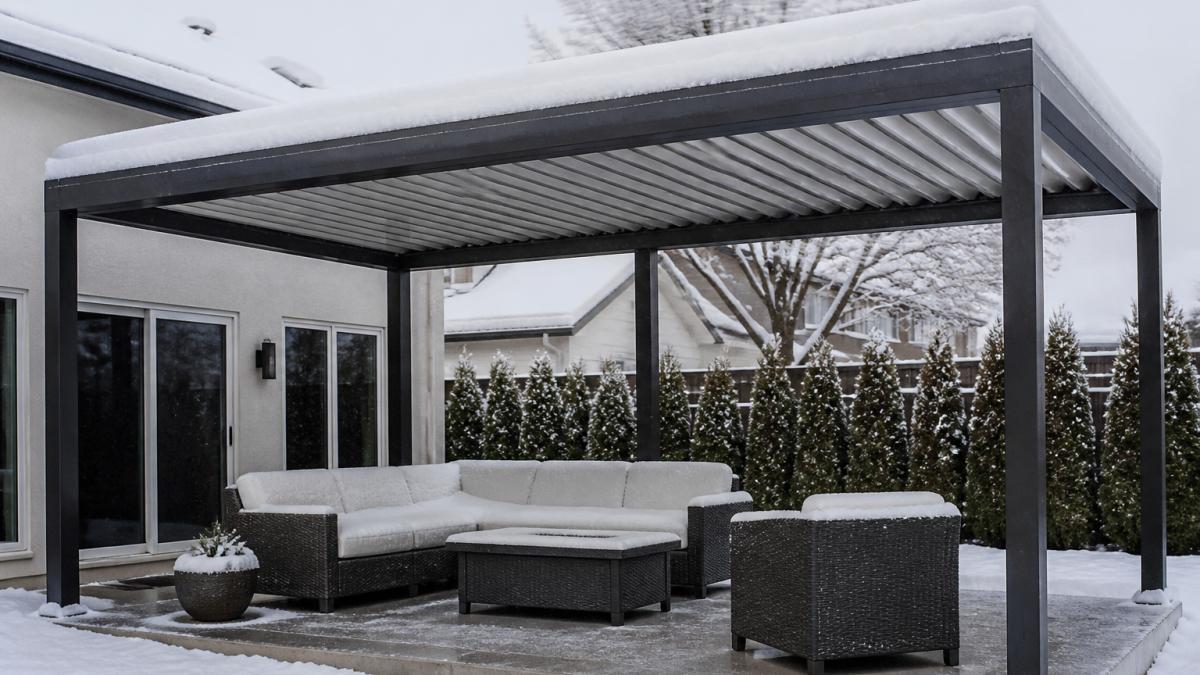
Roof design decides where snow goes and how its weight travels into the frame. The three main configurations behave very differently under load.
A louvered roof uses adjustable slats that can be closed against snow or opened to let light in.
The roof you choose changes the frame you need. A solid roof on a light frame is a recipe for failure. Match the roof panel to a frame rated for the full load the roof will carry.
Pergola Structural Engineering: Load Paths, Drifting, and Uneven Snow
Pergola structural engineering is about moving weight from the roof down to the ground without overloading any single part.
Drifting and uneven snow are what break that chain. Wind pushes snow into piles against posts and along roof edges, so one corner can carry far more weight than the middle. Meltwater refreezes into ice that concentrates load in low spots.
Good engineering accounts for this. Reinforced connections, properly sized posts, and code-compliant footings give the structure reserve capacity for uneven loading. This is exactly the kind of calculation we build into every project, because a Wasatch Front winter does not distribute snow evenly.
Safe Snow Removal and Winter Maintenance
Clearing snow protects a pergola, but how you clear it matters as much as whether you do. The goal is to remove weight before it exceeds the rating, without damaging the roof or the frame.
Follow these rules for safe removal:
- Use a soft plastic or foam snow rake, never a metal shovel that can scratch coatings.
- Pull snow off in layers rather than trying to move a heavy drift in one push.
- Clear drifts against posts and edges first, since that is where load concentrates.
- Never climb onto the roof to clear it.
- Knock down icicles and ice dams before they add concentrated weight.
Inspect connections each fall before the first storm. Check for loose brackets, cracked panels, and any rust or corrosion at steel parts. Catching a small problem in autumn is far cheaper than repairing a failed joint in January.
Winterizing is mostly about preparation. Confirm your footings and anchoring are sound, touch up any scratched powder coating, and know your structure's rated load so you can judge when to clear snow. A pergola built for local snow loads, with the right materials and engineered connections, needs far less of this work than one that was undersized from the start.
Winter on the Wasatch Front does not forgive guesswork. If you are planning a pergola that has to carry real snow, the materials, connections, and load rating all have to line up before the first storm arrives.
Frequently Asked Questions
What is the best material for a pergola in a heavy-snow area?
Powder-coated extruded aluminum is usually the strongest practical choice for snow load pergolas. It resists rot, rust, and warping, and it can be engineered with steel reinforcement at connections to meet a specific snow load rating. Vinyl panels and light frames are the weakest options in deep snow because they crack, sag, or deflect under sustained weight.
How much snow can a pergola hold?
Capacity depends on the engineered snow load rating, usually stated in pounds per square foot (psf). A structure rated for 40 psf is designed for roughly 40 pounds of snow on every square foot of roof area. Wet snow weighs far more than dry powder, so a modest depth of wet snow can equal a much deeper dry snowfall. Always match the rating to your local ground snow load and check the manufacturer's stamped documentation rather than guessing from roof appearance.
Are aluminum pergolas strong enough for heavy snow?
Yes, when they are engineered for it. Commercial-grade extruded aluminum frames with steel reinforcement at beams, rafters, and connections can meet high snow load ratings, and aluminum does not rot or warp like wood. The key is the rating, not just the material name. Ask for the tested snow load in psf, the connection details, and the anchoring plan. A lightweight decorative aluminum kit with thin walls and no reinforcement is not the same product as a load-rated system.
Does a pergola need to be engineered for snow load?
In snow country, yes. Local building codes set ground snow loads that vary by area, and attached or permitted structures typically must be designed to meet them. Engineering accounts for beam spans, rafter size, connection strength, roof design, and how snow drifts or piles unevenly. A contractor should provide stamped plans or manufacturer ratings before installation. Skipping this step risks sagging, cracked panels, or collapse under a heavy winter storm.
What pergola roof material is best for snow?
Solid roof panels in metal or reinforced polycarbonate shed snow better than open slats because they create a continuous surface, though they also collect more weight. Louvered aluminum roofs can be adjusted to let snow fall through, which reduces accumulation but still requires a load rating. Open-rafter designs collect the least snow but offer little cover. Whichever you choose, pitch matters: a steeper roof encourages sliding, while a flat roof holds snow and needs a higher rating.
Plan your project with Jake
Share your project type, location, scope and timing. Jake confirms an on-site estimate after your callback.