
Best Materials for Deck Replacement in Cold Climates
By Jake Jensen
Last Updated: October 23, 2026
Quick Summary
The best materials for deck replacement in cold climates are premium composite, PVC, and advanced composites, which resist moisture absorption and freeze-thaw damage while requiring minimal maintenance. These engineered materials outperform traditional options by preventing the cracking, warping, and rot caused by repeated freeze-thaw cycles and heavy snow loads.
- Premium composites last 30-40 years with minimal maintenance compared to 15-25 years for pressure-treated lumber.
- Maintain at least 18 inches of ground clearance and proper drainage to extend deck lifespan by years.
- Installation details like correct gapping, fastening, and ventilation matter as much as board material for freeze-thaw performance.
- Textured composite or PVC boards combined with proper snow removal provide the best winter traction and safety.
- Deck substructure must be engineered for your region's specific snow loads and frost-line requirements to prevent failure.
Table of Contents
- Why Material Selection Matters for Cold-Climate Decks
- Composite Decking in Cold Climates: Performance and Durability
- Freeze-Thaw Resistant Decking: PVC and Advanced Composites
- Pressure-Treated Lumber and Traditional Options
- Slip-Resistant Decking for Snow and Ice Management
- Snow Load Requirements for Decks: Engineering Your Structure
- Material Comparison Table and Selection Guide
- Frequently Asked Questions
Why Material Selection Matters for Cold-Climate Decks
Choosing the right material for your deck replacement in a cold climate isn't just about aesthetics. The wrong choice can lead to cracking, warping, rot, and structural failure within just a few years.
At Next Level Exteriors, we've engineered custom decks for the Wasatch Front. We've seen what happens when homeowners prioritize cost over durability: decks that fail prematurely, require constant maintenance, and eventually need complete replacement.
The material you select determines whether your deck will last 15 years or 40 years. It affects maintenance demands, safety in winter conditions, and total lifecycle cost. This guide covers the top performers for harsh winters and explains why each one matters for your specific situation.
Composite Decking in Cold Climates: Performance and Durability
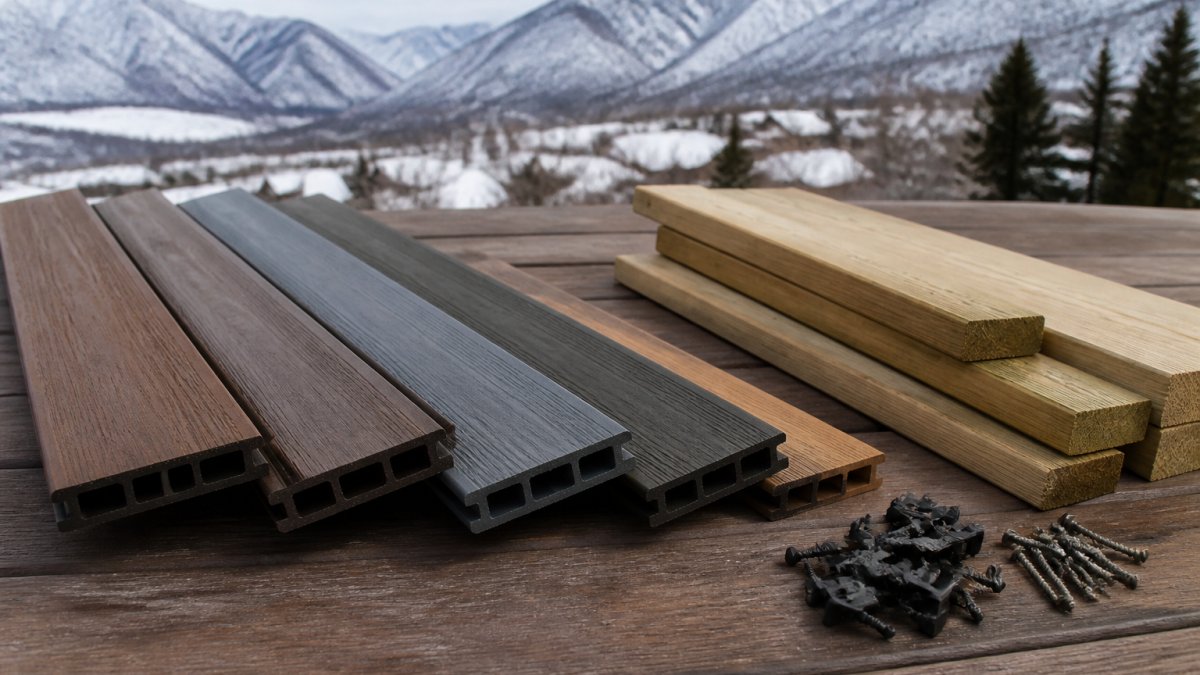
Composite decking dominates the cold-climate market for good reason. These boards combine wood fibers and recycled plastic, creating a material that resists the moisture absorption that destroys traditional lumber.
The key advantage is rot resistance. Wood fibers in composites are encased in plastic, preventing water penetration that leads to mold, mildew, and structural decay. In freeze-thaw cycles, this matters enormously: water trapped inside wood expands as it freezes, causing cracking and splintering. Composite materials eliminate this problem almost entirely.
Durability varies by brand. Premium composites like Trex Pro perform better than budget options. Higher plastic content means better moisture resistance and less expansion and contraction with temperature swings. Premium composites often last 30-40 years with minimal maintenance.
The main drawback is cost. However, when you factor in replacement frequency and maintenance, composite becomes competitive over the deck's lifetime.
Freeze-Thaw Resistant Decking: PVC and Advanced Composites
PVC decking represents the premium end of the material spectrum. These boards use polyvinyl chloride as the primary material, with minimal or no wood content. The result is extraordinary freeze-thaw resistance: PVC boards absorb essentially no water, so there is no trapped moisture to expand when temperatures drop below freezing. That eliminates the cracking, splintering, and warping mechanisms that shorten the life of moisture-absorbing boards.
Advanced composite boards, those with higher plastic content and engineered core structures, approach PVC performance while offering a more authentic wood-grain appearance. These premium composites are engineered specifically for harsh climates and heavy snow loads, and many use a capped polymer shell over a composite core to block water at the surface.
Why the installation details decide performance
The board is only half the story. In freeze-thaw regions, the details that prevent movement and premature failure are spacing, fastening, ventilation, and drainage. A common pattern among experienced installers:
- Gapping and end spacing. PVC and advanced composites expand and contract more per degree of temperature change than lumber-based boards. Follow the manufacturer's temperature-adjusted gap chart at the time of installation; boards installed tight on a warm afternoon can buckle or close their gaps when the first hard freeze arrives. Leave the specified end gap at butt joints and at fascia and rim transitions.
- Fastening. Use the hidden clip or fastener system specified for the board, and do not overdrive screws. Overdriven fasteners create stress points that crack in freeze-thaw cycling. Where direct fastening is required, pre-drill per the manufacturer's instructions.
- Ventilation and drainage. Keep at least 18 inches of clearance from the ground to the underside of the joists where site conditions allow, and never block the space between joists with solid skirting. Air movement dries the framing and the board underside. Slope the deck surface away from the house at the manufacturer's minimum (commonly 1/8 inch per foot) so meltwater drains instead of pooling and refreezing.
- Flashing and ledger details. Water that gets behind the ledger and refreezes is a leading cause of premature framing failure. Proper metal flashing and a drainage plane at the house connection protect the structure regardless of board material.
The trade-off is price. If you are building in a zone with extreme temperature swings and heavy moisture exposure, the extra cost is justified by durability and by the installation details that keep the boards stable through decades of freeze-thaw cycling.
Pressure-Treated Lumber and Traditional Options
Pressure-treated lumber remains a viable option for cold climates, though it requires more maintenance than composite or PVC alternatives.
The advantage is cost and familiarity. Treated lumber costs less per board than composite or PVC. Many homeowners and contractors understand installation and maintenance. The wood appearance appeals to those seeking a traditional aesthetic.
However, treated lumber still absorbs moisture. Over 30 years, this maintenance cost rivals the price difference between treated wood and composite materials.
For cold climates, avoid untreated softwoods entirely. Cedar and redwood, while naturally rot-resistant, still absorb water and crack in freeze-thaw cycles. Tropical hardwoods perform better but cost significantly more and raise environmental concerns.
Slip-Resistant Decking for Snow and Ice Management
Winter safety is often overlooked in material selection. A beautiful deck is useless if it becomes a skating rink after freezing rain. The key distinction most guides miss: traction is a property of the surface system, board texture plus coating plus footwear plus ice management, not of the board alone.
How the materials compare on traction
- Textured composite and PVC. Embossed or brushed surfaces and boards with embedded grit provide meaningfully better wet and icy traction than smooth finishes. When selecting composite or PVC, choose a textured option if snow and ice are concerns. Note that a factory-applied surface texture can wear or fill with debris over time; periodic cleaning restores grip.
- Capped versus uncapped boards. A capped polymer shell is smoother and more water-shedding than an uncapped surface, which can reduce grip when wet. Many manufacturers offer a textured cap specifically to offset this.
- Treated lumber and other lumber-based boards. These offer good natural traction when new and dry, but the advantage fades as the surface weathers and as algae or mildew film develops. A slick, algae-covered board is a hazard regardless of material.
- Coatings change everything. A fresh sealer, paint, or stain can be slicker than the bare board, especially when wet. If you coat a deck, choose a product labeled for slip resistance and re-check traction after the first freeze.
Ice management that actually works
- Clear snow early. Remove snow before it compacts into ice. Use a plastic or composite-safe snow shovel; a metal blade can gouge composite and PVC boards and leave a rough surface that traps water.
- Avoid rock salt on composite and PVC. Chloride-based deicers can stain, chalk, or degrade the surface over time. Use a manufacturer-approved deicer, or sand and grit for traction, and sweep up residue after a melt.
- Address refreeze zones. Low spots, stair landings, and the shaded north side of a deck refreeze first. Slope and drainage details from the installation determine how much water sits and refreezes there.
- Stair nosings and edge treatment. Install metal or composite stair nosings with anti-slip edges. These are the highest-risk locations in winter and the cheapest place to add traction.
The most slip-resistant approach combines textured composite or PVC boards, proper snow and ice management, and anti-slip hardware at stairs and edges. That combination outperforms choosing a material based solely on a slip-resistance claim.
Snow Load Requirements for Decks: Engineering Your Structure
Material selection is only half the equation. Your deck's substructure must handle the weight of accumulated snow specific to your region.
The Wasatch Front experiences heavy snow loads. Building codes require decks to support significant snow loads in many areas. This isn't just about the boards, the joists, beams, posts, and footings must all be engineered for these loads.
Posts must be properly spaced and sized. Footings must extend below the frost line to prevent heaving during freeze-thaw cycles. Joist spacing and beam size must account for local snow loads, not generic national standards.
This is where working with a contractor experienced in your specific climate matters. Next Level Exteriors custom-engineers every deck for local snow loads and frost depth requirements.
Material Comparison Table and Selection Guide
| Material | Freeze-Thaw Resistance | Moisture Resistance | Maintenance | Lifespan | Best For |
|---|---|---|---|---|---|
| Premium Composite | Excellent | Excellent | Low (annual cleaning) | 30-40 years | Most homeowners; balance of durability and cost |
| PVC Decking | Exceptional | Exceptional | Minimal | 40+ years | Maximum durability; extreme climates |
| Pressure-Treated Lumber | Good | Moderate | High (stain every 2-3 years) | 15-25 years | Budget-conscious; willing to maintain |
| Advanced Composite | Excellent | Excellent | Low | 35-40 years | Premium performance; authentic appearance |
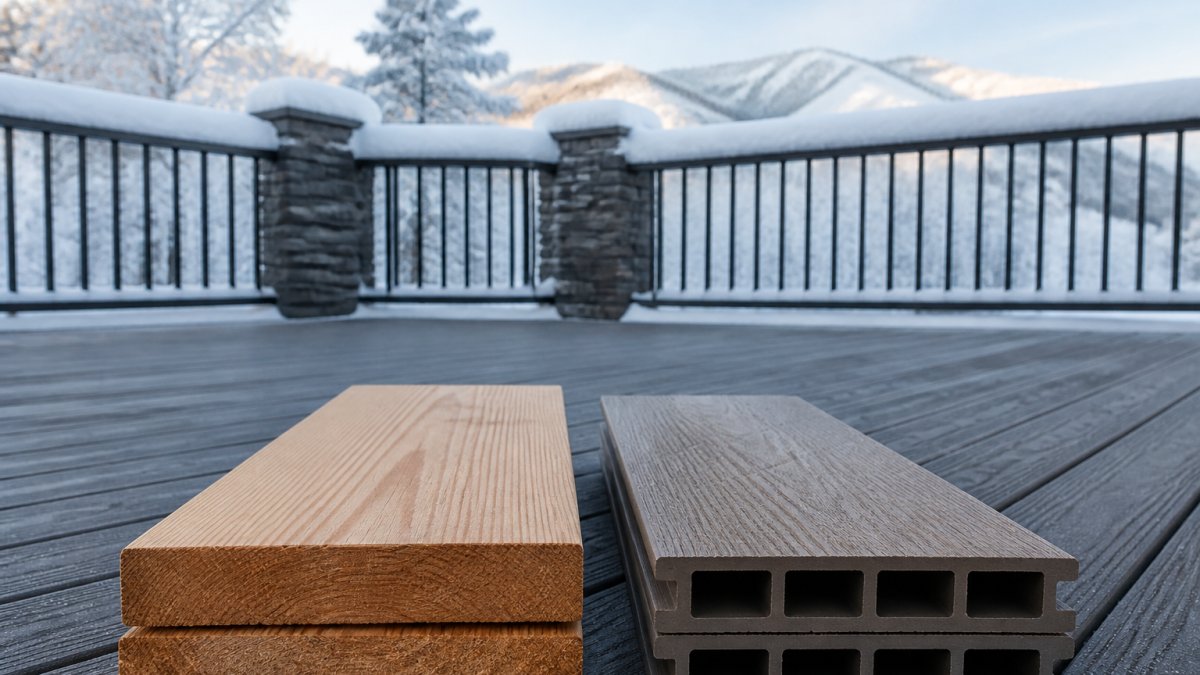
The best materials for deck replacement in cold climates depend on your priorities. If durability and low maintenance matter most, premium composite or PVC wins. If you want maximum longevity with minimal upkeep, PVC or advanced composite justifies the higher cost.
Your deck's substructure matters as much as the board material. A premium deck board on undersized joists will fail. A properly engineered structure with mid-range composite will outperform a poorly built deck with premium materials.
Choosing the right material for your deck replacement in a cold climate requires understanding both the board material and the structural engineering needed for your specific region. Our Trex Pro Certified installation and transparent owner-involved process ensure your deck is built right the first time.
Frequently Asked Questions
What decking material holds up best in cold climates?
Composite and PVC decking materials outperform traditional options in harsh winters because they resist moisture absorption and freeze-thaw damage. Composite boards made from wood fibers and recycled plastic maintain structural integrity through extreme temperature fluctuations, while PVC options eliminate wood rot and splintering entirely.
Is composite decking suitable for freezing temperatures?
Yes. Composite decking is specifically engineered for freeze-thaw cycles common in cold climates. The material's low water absorption prevents ice formation inside the board structure, which is the primary cause of cracking and warping. High-quality composite products designed for harsh winters maintain their shape and surface integrity even after repeated freeze-thaw cycles, making them ideal for regions with significant snow and temperature swings.
What should I look for in cold-weather decking?
Prioritize moisture resistance, freeze-thaw durability, and slip resistance. Look for materials with low water absorption rates to prevent ice damage. Check for slip-resistant surfaces or texturing that maintains traction when wet or snow-covered. Verify that the product is rated for your region's snow load requirements and extreme temperature ranges. Custom engineering for local conditions, like the heavy snow loads of mountain regions, ensures your deck won't fail under seasonal stress.
How does freeze-thaw weather affect deck materials?
Freeze-thaw cycles cause water trapped inside or on deck boards to expand as it freezes, creating internal stress that leads to cracking, warping, and splintering. Materials with high water absorption, like untreated wood, deteriorate rapidly in these conditions. Composite and PVC decking resist this damage because they absorb minimal moisture. Proper drainage and ventilation under the deck structure also reduce water pooling, which amplifies freeze-thaw damage over multiple winter seasons.

Plan your project with Jake
Share your project type, location, scope and timing. Jake confirms an on-site estimate after your callback.