Best Decking Material for Full Sun: A 2026 Guide
By Jake Jensen
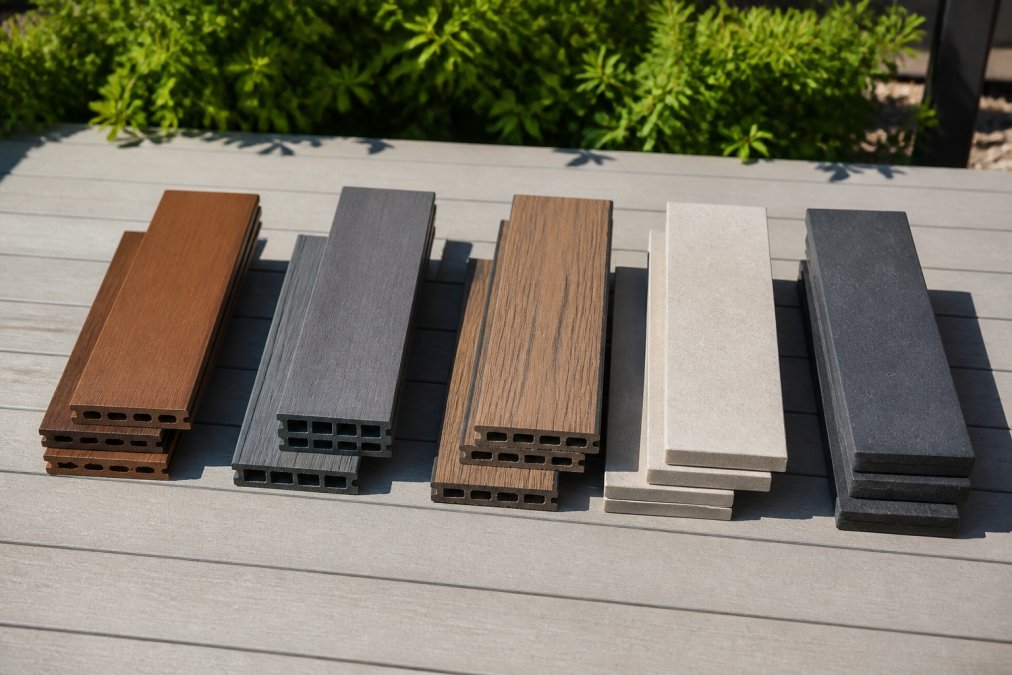
Table of Contents
- Why Full Sun Exposure Demands Different Decking Choices
- Heat-Resistant Composite Decking: Performance in Direct Sunlight
- Composite Decking Surface Temperature: What the Data Shows
- UV Resistance and Color Fading: Long-Term Durability
- How to Cool Down a Deck: Practical Strategies for Comfort
- Material Durability in Harsh Climates: What Holds Up
- Making Your Choice: Decking Material Selection for Full Sun
- Frequently Asked Questions
Last Updated: September 25, 2026
Why Full Sun Exposure Demands Different Decking Choices
Full sun exposure demands material selection that handles extreme heat, intense UV radiation, and rapid temperature swings. The difference between a 20-year deck and one that fails in five often comes down to choosing the right decking material for full sun.
A deck surface in direct sunlight can reach temperatures 30-40 degrees higher than ambient air, the difference between barefoot-friendly and too hot to touch. UV rays fade colors, thermal expansion stresses fasteners, and moisture absorption weakens materials not engineered for full sun.
The right best decking material for full sun combines UV-resistant technology, heat-mitigation design, and proper climate-specific installation. This guide covers what actually works in practice.
Heat-Resistant Composite Decking: Performance in Direct Sunlight
Composite decking engineered for full sun outperforms alternatives by combining wood fibers with plastic polymers to resist fading and handle thermal stress.
Premium composites feature capstock technology, a protective outer layer that shields the core from UV damage and maintains color stability for decades. Cheaper composites without capstock fade noticeably within 3-5 years.
Composites engineered for thermal expansion use advanced polymers that flex without warping. Proper substructure ventilation and spacing reduce heat retention that warps boards and stresses fasteners.
Proper substructure engineering, including post spacing, joist sizing for thermal loads, and ventilation gaps, significantly improves performance in full sun.
Composite Decking Surface Temperature: What the Data Shows
Surface temperature depends on color, material composition, capstock technology, and substructure design, understanding these differences is essential for comfort and longevity.
Temperature Performance by Color and Material Type
Light composites reach 120-130°F, medium tones 130-145°F, and dark composites 150-165°F, a 45-degree spread between barefoot-safe and too hot to touch.
Premium composites with reflective pigments reduce surface temperature by 10-18 degrees compared to standard composites of the same color.
The Reflective Glare Problem
Light composites with glossy finishes can create blinding glare during peak sun hours, reducing usability when you'd otherwise enjoy the space.
Matte finishes on light composites reduce glare while maintaining thermal benefits. Medium tones with matte finishes offer a practical balance: reasonable cooling, glare resistance, and graceful aging.
Substructure Heat Retention and Surface Temperature
A deck built directly on concrete or with minimal ventilation retains heat long after sunset. Proper airflow beneath joists cools the surface significantly faster.
Proper spacing between joists and ground (typically 12-18 inches) allows air circulation that removes heat. A well-ventilated deck can be 8-12 degrees cooler at dusk. Posts should be mounted on adjustable footings, never directly on concrete.
Light to medium tones balance aesthetics with thermal performance. For darker colors, invest in premium materials with reflective technology and excellent substructure ventilation. Specify matte finishes to avoid glare.
UV Resistance and Color Fading: Long-Term Durability
UV resistance determines appearance and structural integrity. Capstock technology and pigment quality determine whether materials fade in 3-5 years or stay vibrant for 20+ years.
Standard composites without capstock fade within 3-5 years as UV radiation breaks down fibers and polymers. Premium materials with capstock fade much more slowly.
High-quality colorants resist UV breakdown better than cheaper alternatives, recovering initial cost through extended lifespan and reduced maintenance.
UV exposure affects structural integrity, materials that degrade become brittle and prone to cracking. UV resistance matters for durability, not just appearance.
Maintenance slows fading but won't prevent it without protective technology built into the material. Focus on material selection first.
How to Cool Down a Deck: Practical Strategies for Comfort
Several practical strategies reduce surface temperature and improve usability, working best when combined.
Shade Structures: The Most Effective Solution
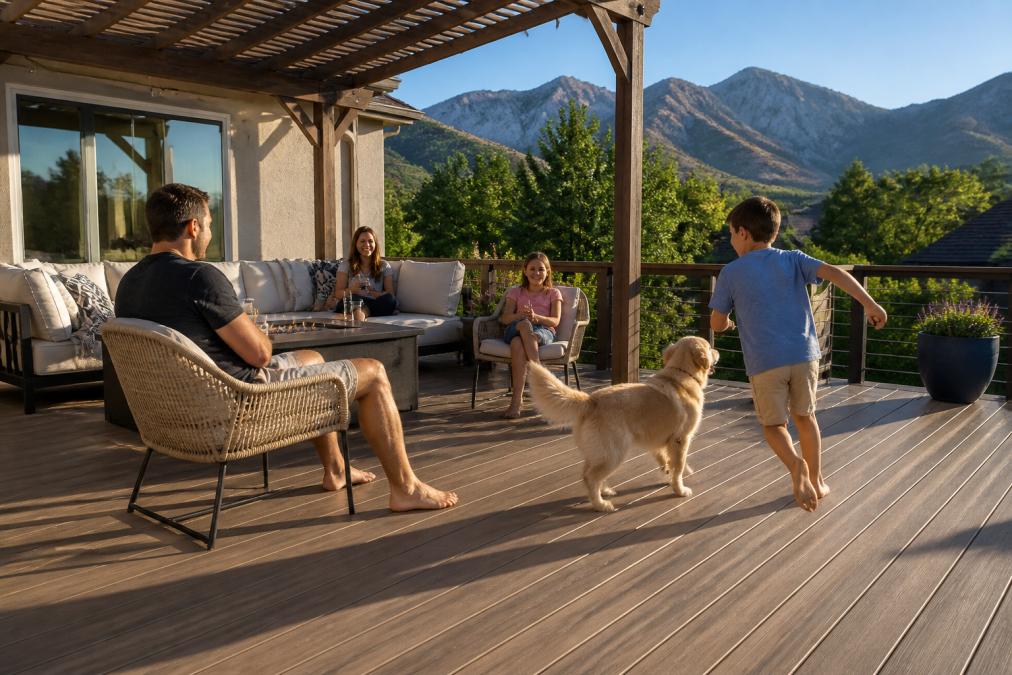
A pergola, shade sail, or retractable awning can reduce surface temperature by 20-30 degrees in the shaded zone. Even partial shade coverage makes a measurable difference in comfort and material longevity. Full shade (90%+ coverage) is most effective but reduces the sense of openness; partial shade (50-70% coverage) balances comfort with aesthetics.
The type of shade structure matters. A solid roof or dense shade cloth cools more aggressively than a pergola with 30% slat coverage. However, solid structures trap heat underneath and reduce ventilation, which can actually increase substructure temperature and stress fasteners. A pergola or lattice structure with partial gaps allows some airflow while still blocking direct UV radiation. If you're building new, consider shade design as part of the initial project, retrofitting shade structures is more expensive and often less effective.
Material and Color Selection: The Foundation
Light-colored composite decking naturally stays cooler than dark alternatives, this is your first and most cost-effective lever. A light composite in full sun will be 20-30 degrees cooler than a dark composite, and this difference persists even without shade structures. If you're building new, choosing a light or medium tone is the single most impactful decision you can make for thermal comfort.
Reflective technology in premium composites extends this advantage. Materials engineered with reflective pigments stay 10-15 degrees cooler than standard composites of the same color. This technology costs more upfront but delivers measurable comfort improvement and extends material lifespan by reducing thermal stress on the surface and fasteners.
Substructure Ventilation: The Hidden Factor
Ventilation beneath the deck prevents heat from building up underneath, which keeps the surface cooler and reduces stress on the underlying structure. Adequate airflow is achieved through:
- Post spacing: Posts should be spaced according to local code (typically 8-12 feet apart) to allow air circulation between joists.
- Clearance height: A minimum 12-18 inches between the ground and the bottom of joists allows meaningful airflow. Decks built lower or directly on concrete retain significantly more heat.
- Joist orientation: Joists running perpendicular to prevailing breezes allow better cross-ventilation than parallel orientation.
- Avoiding solid skirting: Solid skirting around the perimeter traps heat underneath. If you need skirting for aesthetics or to prevent debris accumulation, use lattice or slatted designs that allow airflow.
Proper substructure design during initial installation is far more cost-effective than retrofitting ventilation later. A deck engineered with ventilation in mind will perform noticeably better in full sun than one built with minimal engineering.
Water Features and Ambient Cooling
A small fountain, misting system, or water feature can reduce ambient temperature around the deck by 3-5 degrees through evaporative cooling. This effect is most pronounced in dry climates and during peak heat hours. A misting system on a timer can make the space usable during otherwise unbearable afternoon heat. However, water features require maintenance and add complexity; they're best viewed as a comfort enhancement rather than a primary cooling strategy.
Strategic Landscaping
Trees or tall shrubs can provide natural shade as plants mature. This is a slower solution (3-5 years for meaningful shade) but creates a more integrated outdoor living space and provides additional benefits like privacy and wind reduction. Deciduous trees are ideal for full sun decks: they provide summer shade when you need it most and allow winter sun through when you want warmth. Fast-growing species like hybrid poplars or willows can provide shade in 2-3 years, though they require more maintenance than slower-growing alternatives.
Integration Strategy
The most effective approach combines multiple tactics: choose light-colored composite with reflective technology, ensure proper substructure ventilation, and add shade structures over high-use areas. This layered approach keeps surface temperatures manageable, extends material lifespan, and maximizes usability throughout the day.
Material Durability in Harsh Climates: What Holds Up
Full sun exposure is only one stress factor. In harsh climates, where you have freeze-thaw cycles, heavy snow loads, and temperature swings, material durability depends on both the decking surface and the underlying structure.
Making Your Choice: Decking Material Selection for Full Sun
Choosing the best decking material for full sun requires balancing performance, appearance, and budget. Here's how to evaluate your options:
| Factor | Priority | What to Look For |
|---|---|---|
| UV Resistance | Critical | Capstock protection, proven color retention |
| Heat Performance | Critical | Light color options, reflective technology, thermal engineering |
| Durability | Critical | Material composition, warranty coverage, climate-specific engineering |
| Maintenance | High | Low-maintenance composites |
| Appearance | Medium | Color selection, aging characteristics, aesthetic preferences |
| Cost | Medium | Initial investment vs. long-term value and lifespan |
Frequently Asked Questions
Does composite decking get too hot in direct sunlight?
Composite decking does absorb and retain heat more than some alternatives, but modern heat-resistant composite decking with capstock technology and reflective pigments significantly reduces surface temperature rise. The actual temperature depends on color selection, air circulation beneath the deck, and local climate. Lighter colors and materials engineered for thermal management perform substantially better in full sun exposure than older composite formulations.
What's the best decking material for full sun if I'm concerned about barefoot comfort?
Light-colored composite decking with thermal management technology offers the best balance of durability and comfort. PVC capstock layers reflect solar gain and reduce surface temperature compared to unprotected composites. Color selection matters significantly, lighter shades absorb less heat and remain more comfortable underfoot during peak sun hours.
How does high-altitude sun exposure affect decking longevity?
High-altitude locations experience more intense UV radiation due to thinner atmosphere, which accelerates color fading and material degradation. Composite decking with UV-resistant capstock and high-density construction handles this better than traditional materials. Weather resistance becomes critical in mountainous regions where temperature swings and moisture cycles are more extreme. Materials engineered for thermal expansion and moisture absorption perform better over the long term in these conditions.
What features should I look for in heat-resistant composite decking?
Look for PVC capstock protection, which shields the core material from UV damage and reduces heat absorption. High-density construction with thermal management technology helps prevent excessive surface temperature rise. Color retention ratings and warranty coverage for fading indicate manufacturer confidence in UV resistance. Materials designed with proper ventilation underneath and thermal expansion allowances handle seasonal temperature swings better. Ask about barefoot comfort testing and surface temperature data for your climate.
Plan your project with Jake
Share your project type, location, scope and timing. Jake confirms an on-site estimate after your callback.