Best Composite Decking Material: 2026 Comparison
By Jake Jensen
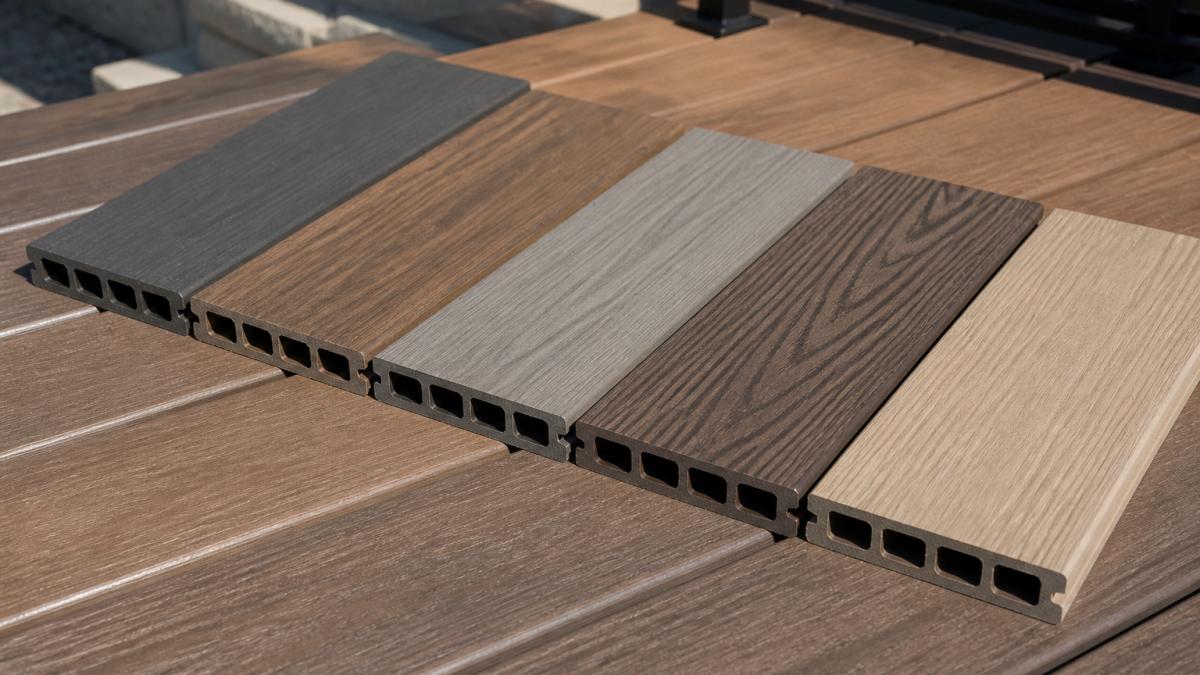
Table of Contents
- Composite Decking Comparison Table
- Capped vs Uncapped Composite Decking: What's the Difference
- Key Factors for Choosing the Best Composite Decking Material
- How Long Does Composite Decking Last
- Composite Decking Maintenance Tips for Long-Term Performance
- Photos of Trex Decking and Real-World Aesthetics
- Conclusion: Selecting Your Ideal Composite Decking
- Frequently Asked Questions
Last Updated: October 2, 2026
Composite Decking Comparison Table
Choosing the best composite decking material depends on your climate, budget, and maintenance preferences.
| Material | Composition | Best For | Key Advantage | Main Consideration |
|---|---|---|---|---|
| Trex | 95% recycled materials | Eco-conscious homeowners | Industry-leading durability and sustainability | Can retain heat in direct sun |
| TimberTech Advanced PVC | 100% PVC | Wet climates, high moisture | Superior moisture resistance, stays cooler | Premium pricing |
| Fiberon Sanctuary | Capped composite | Budget-conscious buyers | Natural aesthetics at competitive value | Smaller color selection |
| Deckorators Vista | Mineral-based composite | High-load applications | Minimal thermal expansion | Specialized installation |
| Next Level Exteriors (Trex Pro Certified) | Custom-engineered Trex systems | Utah climate, snow loads | Owner-involved design, local expertise | Regional service area |
Capped vs Uncapped Composite Decking: What's the Difference
Capped composite features a protective polymer shell around the wood-plastic core material, while uncapped composite leaves the wood-plastic interior exposed to the environment.
How Capping Works
Capped composites like Fiberon Sanctuary and TimberTech Advanced PVC have a polymer cap layer that blocks UV rays, prevents moisture penetration, and resists scratches and stains.
Manufacturers apply the cap during extrusion, bonding it chemically to the core so it doesn't peel or separate over time, which is why capped boards cost more upfront.
Uncapped composites skip this step entirely. The wood-plastic core is exposed directly to weather, UV light, and moisture. While uncapped materials still contain plastic binders that make them more durable than traditional materials, they lack the protective barrier that prevents degradation.
Real-World Performance Differences
In high-UV environments like Utah's Wasatch Front, uncapped boards fade noticeably within 3-5 years as UV light breaks down pigments, while capped boards maintain their original color because the polymer cap absorbs UV damage instead of the core material.
Uncapped composites absorb water in freeze-thaw climates, causing wood fibers to swell and shrink unevenly, leading to cupping or warping. Capped composites resist this because the polymer cap prevents water from reaching the core. TimberTech Advanced PVC's 100% PVC composition essentially eliminates water absorption entirely.
Uncapped boards are prone to organic staining from leaves, pollen, algae, and mold growth that's difficult to remove. Capped boards resist staining because spills sit on the hard polymer surface rather than being absorbed; a garden hose rinse removes most stains.
The Thermal Expansion Trade-off
Capped materials expand 30-40% less than uncapped materials because the rigid polymer cap constrains core movement. In Utah's freeze-thaw climate, this difference prevents fastener stress, board warping, and structural problems.
Cost vs. Long-Term Value
Uncapped composite decking costs 15-25% less upfront but has a shorter aesthetic lifespan (12-15 years before fading) and higher maintenance burden, making total cost of ownership often exceed capped systems over 25-30 years.
Capped materials cost more initially but deliver set-it-and-forget-it performance with preventive rather than corrective maintenance, making them better long-term value for homeowners keeping decks 20+ years.
Key Factors for Choosing the Best Composite Decking Material
Selecting the best composite decking material requires weighing durability, climate fit, and structural demands against your budget and aesthetic preferences.
Durability and Weather Resistance
Composite decking resists rot, mold, and UV fading. Trex's capped design delivers exceptional scratch and stain resistance, while TimberTech Advanced PVC's 100% PVC composition eliminates mold growth entirely.
In the Wasatch Front's freeze-thaw climate with significant snow loads, capped composites with strong UV stability are essential.
Leading brands offer 25-30 year warranties on fade and stain resistance. For maximum durability in harsh climates, Trex's proven track record and Next Level Exteriors' Trex Pro Certified expertise make it the practical choice.
Thermal Expansion and Regional Climate Fit
Thermal expansion, how much a material grows and shrinks with temperature, is critical for proper installation and long-term performance.
Deckorators Vista uses mineral-based composite technology to minimize thermal expansion. Standard composites can expand 1/4 inch per 20 feet, causing fastener stress and warping if not properly engineered.
Hidden fastener systems help manage expansion by allowing boards to move slightly without visible fastener stress. Next Level Exteriors designs decking systems with Utah's specific climate data in mind, accounting for snow load weight, seasonal temperature swings, and moisture patterns unique to the Wasatch Front.
Structural Integrity and Load Capacity
Composite decking's strength-to-weight ratio determines safe load capacity, critical in snow-heavy regions where decks must bear 40+ pounds per square foot.
Deckorators Vista's mineral-based composite offers higher structural integrity for heavy-load applications. Proper joist spacing, substructure design, and fastening systems prevent deck collapse under snow load.
Next Level Exteriors custom-engineers every deck for local snow loads and freeze-thaw conditions, ensuring decks survive Utah winters.
How Long Does Composite Decking Last
Composite decking typically lasts 25-30 years with proper installation and maintenance. High-quality capped composites like Trex often perform well into their fourth decade.
Longevity depends on material quality, installation precision, and climate conditions. Trex's protective cap layer and TimberTech Advanced PVC's all-PVC construction both support 30+ year lifespans.
Installation quality directly impacts lifespan. Custom-engineered systems like those from Next Level Exteriors account for local climate stress, extending real-world performance well beyond generic estimates.
In Utah's climate, where freeze-thaw cycles accelerate material degradation, properly engineered composite decking outlasts other materials. The initial investment pays dividends over decades of maintenance-free performance.
Composite Decking Maintenance Tips for Long-Term Performance
Composite decking's advantage is that maintenance is preventive and inexpensive rather than structural and costly.
Annual and Seasonal Maintenance Tasks
Annual maintenance involves clearing debris, rinsing with a garden hose, and inspecting fasteners for corrosion. In Utah's climate, spring thaw leaves mineral deposits and algae growth; a gentle wash with a soft brush removes both.
Seasonal tasks include clearing snow and ice carefully, avoid metal shovels that scratch the surface. Use plastic or rubber tools instead.
The Hidden Cost of Material Choice: 10-Year Lifecycle Analysis
Capped composite systems (Trex, TimberTech Advanced PVC, Fiberon Sanctuary) require minimal intervention. Annual cleaning with a garden hose and soft brush takes 2-3 hours per year. Occasional stain removal (1-2 times per year) requires only mild soap and water. Over 10 years, total maintenance labor is roughly 25-30 hours. If you hire a professional for annual cleaning at typical rates, expect $150-250 per visit, or $1,500-2,500 over a decade. Material costs for replacement fasteners or minor repairs are minimal because the protective cap prevents structural degradation.
Protecting Against Staining and Discoloration
Wipe up spills promptly, especially oils, rust, or organic matter. Capped materials resist staining far better than uncapped, which is why the material choice affects maintenance burden. For capped composites, most spills can be cleaned with water alone. For uncapped materials, oils and rust can leave permanent marks if not treated immediately.
When to Call a Professional
Most composite deck maintenance is DIY-friendly. However, structural issues, fastener corrosion, board separation, or substructure problems, require professional inspection. If your deck shows signs of movement, creaking, or visible fastener rust after 5+ years, have a contractor evaluate it. Early intervention prevents expensive repairs later.
Photos of Trex Decking and Real-World Aesthetics
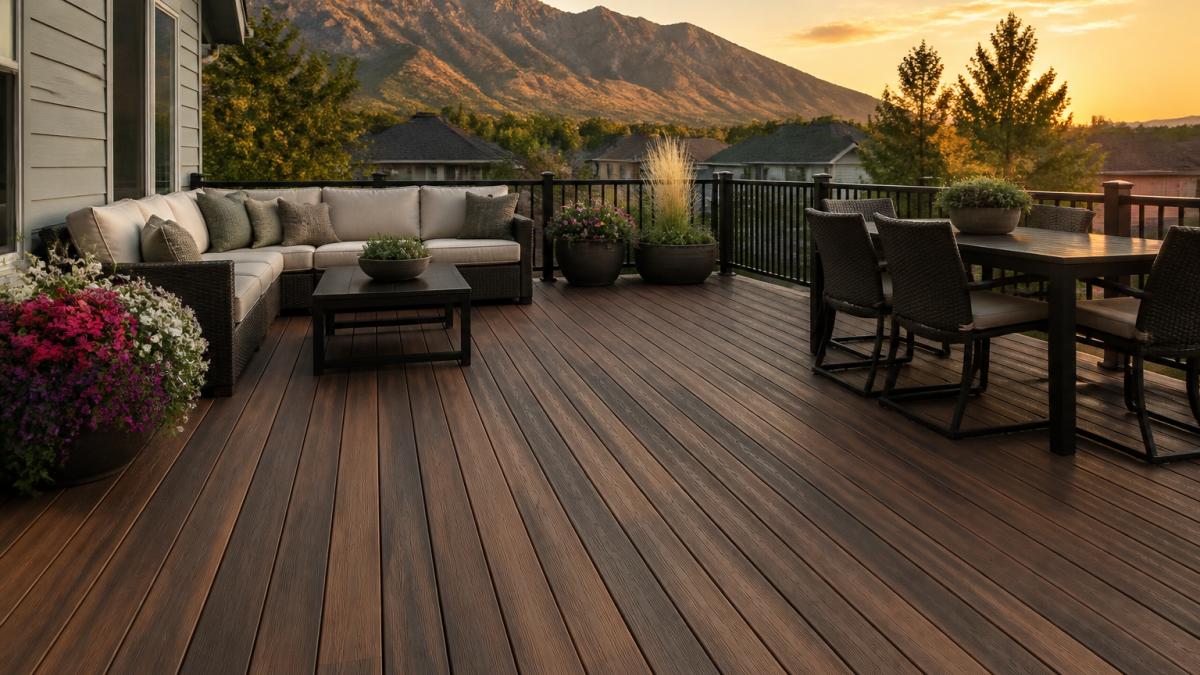
Composite decking aesthetics have evolved dramatically. Modern capped composites replicate hardwood grain patterns and natural color variation without the maintenance burden.
Conclusion: Selecting Your Ideal Composite Decking
The best composite decking material balances durability, climate fit, and long-term value. For most homeowners in Utah's climate, capped composite systems engineered for local snow loads and freeze-thaw cycles outperform uncapped alternatives by a significant margin.
Frequently Asked Questions
Is TimberTech or Trex better for composite decking?
Both are industry leaders, but they serve different priorities. Trex excels in sustainability with 95% recycled content and offers excellent scratch and stain resistance. TimberTech Advanced PVC uses 100% PVC, making it superior for moisture-heavy environments and preventing mold growth. For heavy snow loads and regional climate demands, the choice depends on whether you prioritize eco-friendliness (Trex) or maximum moisture resistance (TimberTech). Your installer can recommend based on your specific site conditions.
What are the main differences between capped vs uncapped composite decking?
Capped composite decking has a protective polymer shell around the core, offering superior stain and scratch resistance, ideal for high-traffic areas. Uncapped composite lacks this shell, making it more affordable but requiring more frequent cleaning and maintenance. Capped options like Fiberon Sanctuary and TimberTech are better for long-term durability in varying climates, while uncapped materials suit budget-conscious projects with lower exposure demands.
How long does composite decking actually last?
Quality composite decking typically lasts 25-30 years with proper maintenance, significantly longer than other materials. Capped composites and premium PVC options extend lifespan toward the higher end. Lifespan depends on material quality, installation precision (including proper substructure and fastening), climate exposure, and maintenance frequency. Regional factors like heavy snow loads, UV intensity, and moisture levels affect longevity, so custom engineering for your climate is essential.
What composite decking maintenance is actually required?
Composite decking is low-maintenance but not maintenance-free. Annual cleaning with mild soap and water removes dirt and mold growth. Avoid pressure washers above 3000 PSI, which can damage the surface. For capped composites, minimal additional care is needed. Uncapped materials may need more frequent cleaning. Inspect fasteners and substructure annually, especially in harsh climates. Most manufacturers recommend basic seasonal inspection rather than staining or sealing.
Ready to build a composite deck engineered for Utah winters? Contact Next Level Exteriors for a free, pressure-free quote. We handle permits, HOA paperwork, and custom engineering so your deck is built right the first time.
Plan your project with Jake
Share your project type, location, scope and timing. Jake confirms an on-site estimate after your callback.