Alternatives to Traditional Deck Framing
By Jake Jensen
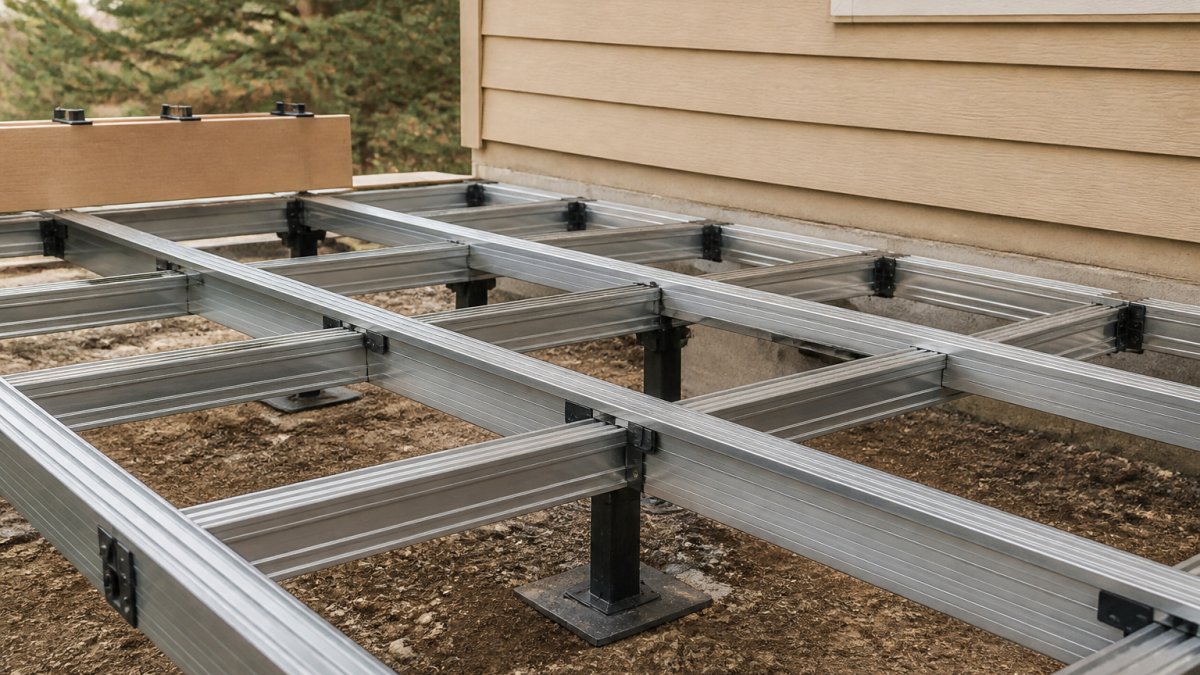
Table of Contents
- Why Homeowners Are Moving Away From Traditional Lumber Framing
- Steel Deck Framing: Strength and Longevity
- Aluminum Deck Framing: Lightweight and Corrosion-Resistant
- Composite Deck Framing: Modern Materials for Modern Decks
- Comparing Framing Materials: Cost, Durability, and Code Compliance
- Choosing the Right Framing Material for Your Climate and Budget
- Frequently Asked Questions
Last Updated: October 12, 2026
Why Homeowners Are Moving Away From Traditional Lumber Framing
Alternatives to traditional framing are becoming the smarter choice for anyone building a structure designed to last through decades of freeze-thaw cycles, heavy snow loads, and moisture exposure.
The underlying issue isn't just aesthetics or convenience. At Next Level Exteriors, we've engineered custom structures using modern framing materials specifically because they solve problems that traditional materials simply cannot address in demanding climates.
Homeowners are exploring steel, aluminum, composite, and engineered alternatives because these materials deliver predictable structural performance, minimal maintenance, and the ability to withstand extreme weather without degradation. This guide covers the most viable alternatives to traditional framing, comparing their structural advantages, real-world performance, cost implications, and code compliance.
Steel Deck Framing: Strength and Longevity
Steel framing eliminates the decay problem entirely. Steel maintains its structural integrity indefinitely when properly treated against corrosion. Steel beams and posts provide consistent load capacity that doesn't degrade over time.
Structural Advantages of Steel
Steel's strength-to-weight ratio means you can span longer distances with smaller members than traditional materials allow. A steel beam rated for 40-foot spans does what traditional materials cannot do safely at that distance.
Galvanized steel resists rust in outdoor environments. The zinc coating protects the underlying metal, extending the life of the structure far beyond what untreated steel would provide. In regions with heavy snow loads or constant freeze-thaw cycles, this corrosion resistance becomes a critical structural advantage.
Steel's dimensional stability matters more than most homeowners realize. Traditional framing materials can shift as humidity changes, which creates movement in the structure above it. Steel stays put. This consistency reduces the stress on fasteners, connections, and the decking surface itself, leading to fewer squeaks, gaps, and alignment problems over the years.
Pros and Cons of Steel Framing
Pros:
- Unlimited lifespan when properly maintained and galvanized
- Superior load capacity allows longer spans and heavier structures
- Predictable structural performance with no seasonal movement
- Resists rot, insects, and moisture damage completely
- Works well with composite decking surfaces
Cons:
- Higher material cost compared to traditional lumber
- Requires specialized fasteners and connection details
- Fewer contractors have experience installing steel framing
- Thermal bridging can occur if not properly designed
- Requires proper drainage design to prevent water pooling
Aluminum Deck Framing: Lightweight and Corrosion-Resistant
Aluminum offers a fundamentally different approach. It's naturally corrosion-resistant without coatings, making it ideal for coastal environments or areas with road salt exposure. The material is lightweight, which simplifies installation and reduces foundation requirements compared to steel.
Why Aluminum Works in Harsh Climates
Aluminum doesn't rust. The metal forms a protective oxide layer naturally when exposed to air, and this layer repairs itself if scratched. This makes aluminum exceptional for wet climates, freeze-thaw regions, or anywhere moisture exposure is constant.
The lightweight nature of aluminum means less structural load on posts and footings. For homeowners concerned about foundation settling or working on sloped terrain, aluminum framing reduces the overall weight the foundation must support. This can mean shallower footings or fewer support posts in some applications.
Thermal conductivity is worth considering. Aluminum conducts heat more readily than some other materials or steel, which can cause condensation issues if not properly managed. Modern aluminum framing systems account for this with thermal breaks or design strategies that prevent the cold-to-warm transition from creating moisture problems.
Pros and Cons of Aluminum Framing
Pros:
- Naturally corrosion-resistant without coatings
- Lightweight, reducing installation labor and foundation stress
- Excellent for coastal or high-moisture environments
- Non-magnetic, simplifying some installation details
- Recyclable material with lower environmental impact than steel
Cons:
- Lower load capacity than steel requires closer beam spacing
- Thermal bridging requires design attention
- Specialized fasteners and connection details needed
- Limited contractor familiarity in many regions
- Can be more expensive than traditional lumber on a per-pound basis
Composite Deck Framing: Modern Materials for Modern Decks
Composite framing combines fibers and plastic polymers into engineered beams and posts. This hybrid approach captures some benefits of traditional materials (workability, familiar installation) while eliminating their core weakness: moisture absorption and decay.
How Composite Framing Performs
Composite framing resists moisture intrusion the way plastic does. Water doesn't soak into the material, so swelling, warping, and rot simply don't occur. The material maintains dimensional stability across temperature swings and humidity changes, reducing movement-related problems in the structure above.
Composite beams can be engineered to specific load requirements. Manufacturers design formulations to meet particular span and load ratings, giving builders predictable performance data. Unlike traditional lumber, where grade and species variation create uncertainty, composite specs are consistent batch to batch.
The material is workable with standard tools and fasteners, making installation straightforward for contractors familiar with traditional framing. This familiarity reduces labor costs and scheduling complications compared to steel or aluminum systems that require specialized knowledge.
Pros and Cons of Composite Framing
Pros:
- Resists rot, insects, and moisture damage completely
- Maintains dimensional stability without seasonal movement
- Workable with standard tools and familiar installation methods
- Engineered to specific load and span requirements
- Aesthetic appeal if exposed (some composite beams have finished surfaces)
Cons:
- Higher material cost than traditional lumber
- Thermal expansion is greater than wood or steel (requires design accommodation)
- Limited long-term durability data compared to traditional materials
- Fewer manufacturers produce framing-grade composite products
- Environmental impact of plastic content varies by product
Comparing Framing Materials: Cost, Durability, and Code Compliance
Each alternative to traditional framing brings different structural, financial, and practical considerations. Understanding how they compare across key criteria helps you make an informed decision for your specific situation.
Load Capacity and Span Tables
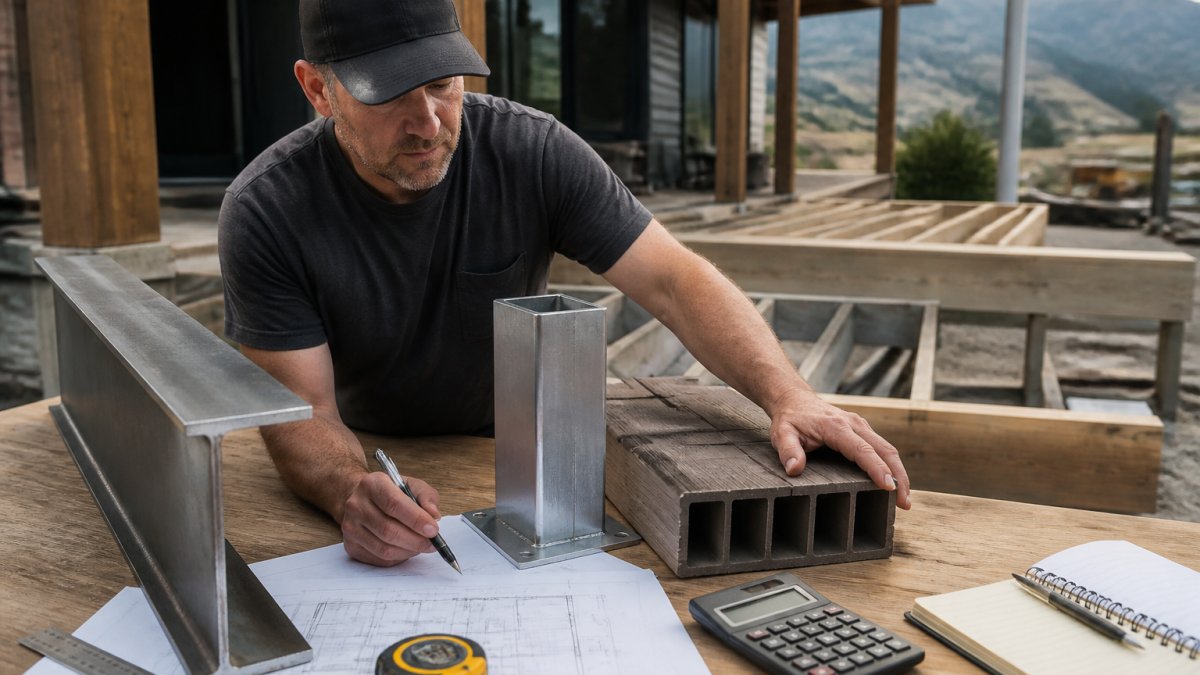
Steel beams consistently outperform other materials in raw load capacity. A 6-inch steel beam can span 40 feet under typical residential loads, while an equivalent traditional beam maxes out around 20 feet. Aluminum requires closer spacing to achieve the same load capacity as steel.
Span tables for each material are published by manufacturers and building code authorities. These tables account for the material's strength, stiffness, and typical load conditions. When planning your framing, you'll consult these tables to determine beam size and spacing.
Code compliance depends on your jurisdiction and the specific framing system. Most building departments accept steel and aluminum framing when proper calculations and connection details are provided. Composite framing is newer and may require additional engineering review in some areas.
| Material | Typical Max Span | Load Capacity | Maintenance | Lifespan |
|---|---|---|---|---|
| Traditional Lumber | 20 feet | Standard | Annual inspection, sealing | 15-25 years |
| Steel (Galvanized) | 40+ feet | High | Minimal (inspect fasteners) | 50+ years |
| Aluminum | 30 feet | Medium | Minimal (rinse salt) | 40+ years |
| Composite | 25 feet | Medium-High | Minimal (inspect fasteners) | 30+ years |
Fastener Compatibility and Installation
Each material requires compatible fasteners. Steel framing uses stainless steel or hot-dipped galvanized bolts to prevent galvanic corrosion where dissimilar metals meet. Aluminum framing uses aluminum or stainless fasteners, never steel, to prevent corrosion at the connection point. Composite framing typically uses stainless fasteners to prevent rust staining on the surface.
Installation labor differs significantly. Composite materials are familiar to most residential contractors, keeping labor costs moderate. Steel and aluminum framing often requires specialized crews, which increases labor expense but ensures proper connection details and code compliance.
Fastener spacing and connection design vary by material. Steel connections often use bolted or welded details that differ from traditional framing conventions. Aluminum requires thermal breaks in some designs to prevent condensation. Composite framing needs fastener spacing that accommodates thermal expansion.
Long-Term Maintenance and Lifecycle Cost
Traditional lumber requires annual inspection and periodic sealing to slow decay. Over 25 years, the cumulative cost of maintenance, repairs, and eventual replacement adds up significantly. Steel framing requires minimal maintenance beyond occasional fastener inspection and touch-up of any damaged galvanizing. Aluminum needs occasional rinsing in coastal areas but otherwise requires no routine maintenance.
Lifecycle cost compares the total expense of material, installation, maintenance, and replacement over 30-40 years. While steel and aluminum have higher upfront costs, their minimal maintenance and extended lifespan often result in lower total cost than traditional lumber that requires replacement mid-life.
Your climate significantly impacts lifecycle economics. In freeze-thaw regions where traditional materials deteriorate faster, metal or composite framing breaks even sooner. In drier climates, traditional materials' lower upfront cost may make it competitive despite longer-term maintenance needs.
Choosing the Right Framing Material for Your Climate and Budget
Your decision depends on three factors: climate demands, maintenance tolerance, and total budget including lifecycle costs.
Heavy snow loads and freeze-thaw cycles favor steel or composite framing because these materials maintain structural integrity through extreme weather.
Maintenance tolerance matters. If you're willing to inspect and seal framing annually, traditional materials remain viable.
Budget considerations include both material and installation costs.
HOA requirements in your area may restrict framing choices if any framing is visible. Some HOAs require specific materials or finishes.
Homeowners who invest in alternatives to traditional framing gain structures engineered to withstand decades of harsh weather without decay, rot, or structural compromise.
Next Level Exteriors specializes in custom-engineered framing systems designed specifically for Utah's snow loads and freeze-thaw cycles.
Frequently Asked Questions
What materials can be used for deck framing besides traditional lumber?
Steel, aluminum, and composite are all viable alternatives to traditional framing. Steel offers superior strength and load capacity, aluminum provides corrosion resistance and is ideal for wet climates, and composite resists rot and insect damage. Each material has different structural properties, costs, and compatibility with decking surfaces, so your choice depends on your climate, budget, and specific project requirements.
Is steel framing a good alternative for a deck?
Steel framing excels in applications requiring maximum strength and span capacity. It resists rot, insects, and weather damage, and can support heavier loads than traditional materials with smaller member sizes. However, steel requires proper galvanizing or coating to prevent rust, demands specialized fasteners, and installation typically requires more expertise. Steel framing works well in high-moisture environments or when building large structures with extended spans, but upfront material and labor costs are generally higher than traditional lumber.
How does aluminum deck framing compare with steel?
Aluminum is lighter, naturally corrosion-resistant, and easier to work with than steel, making it ideal for coastal or wet climates where rust is a concern. Steel offers greater strength and higher load capacity per pound, making it better for heavy-duty applications. Aluminum costs more than steel but requires no protective coating. Steel provides better structural rigidity for very large spans. Both outperform traditional materials in durability and longevity, but your choice depends on load requirements, climate exposure, and budget constraints.
What should I consider when choosing a deck framing system?
Evaluate your local climate (especially snow loads and moisture exposure), the span and size of your structure, your budget for both materials and installation, code requirements in your area, contractor expertise with each material, and long-term maintenance expectations. For heavy snow loads typical of mountain regions, steel and aluminum offer superior performance over traditional materials. Consider also fastener compatibility with your chosen decking surface, whether the contractor is certified in that system, and the warranty offered on both materials and labor.
What are the advantages of composite deck framing?
Composite framing resists rot, insects, and fungal decay without chemical treatment, eliminating the need for pressure treatment. It requires minimal maintenance compared to traditional materials, won't splinter or warp as traditional materials do, and provides consistent structural properties throughout its lifespan. Composite framing is particularly valuable in damp climates or where moisture exposure is high. The main trade-off is higher upfront material cost compared to standard traditional materials, though lifecycle costs often favor composite due to reduced replacement and repair needs over decades.
Plan your project with Jake
Share your project type, location, scope and timing. Jake confirms an on-site estimate after your callback.