5 Best Deck Materials for Wasatch Front Climate
By Jake Jensen
Table of Contents
- Why Deck Material Selection Matters in High-Altitude Climates
- Quick Comparison: Top 5 Deck Materials Rated
- 1. Trex Composite: Durability Meets Low Maintenance
- 2. TimberTech Advanced PVC: Superior Moisture and Thermal Resistance
- 3. Fiberon Paramount PVC: Strength Against Heavy Snow Loads
- 4. Dekorators Voyage: Minimal Thermal Expansion for Extreme Temperature Swings
- 5. Aspire Pavers: Modern Alternative for Elevated Decks
- How to Choose the Right Material for Your Wasatch Front Deck
- Frequently Asked Questions
Last Updated: October 4, 2026
Why Deck Material Selection Matters in High-Altitude Climates
The choice of deck material makes the difference between a structure that lasts decades and one that deteriorates within five years. At Next Level Exteriors, we've engineered dozens of decks across the Wasatch Front, and we've learned that standard materials fail here. High-altitude UV exposure, extreme temperature swings, heavy snow loads, and rapid freeze-thaw cycles create conditions most deck materials simply aren't built for.
This isn't theoretical. A composite board rated for coastal climates behaves differently at 5,000+ feet elevation where UV radiation intensifies and temperatures swing 80 degrees between seasons. Pressure-treated lumber that performs fine at sea level can warp, crack, and develop structural weakness under these stresses. The right material choice accounts for all of this.
Below, we'll walk you through the best deck materials for Wasatch Front climate, engineered to handle what the region throws at them, plus how to evaluate which one suits your specific situation.
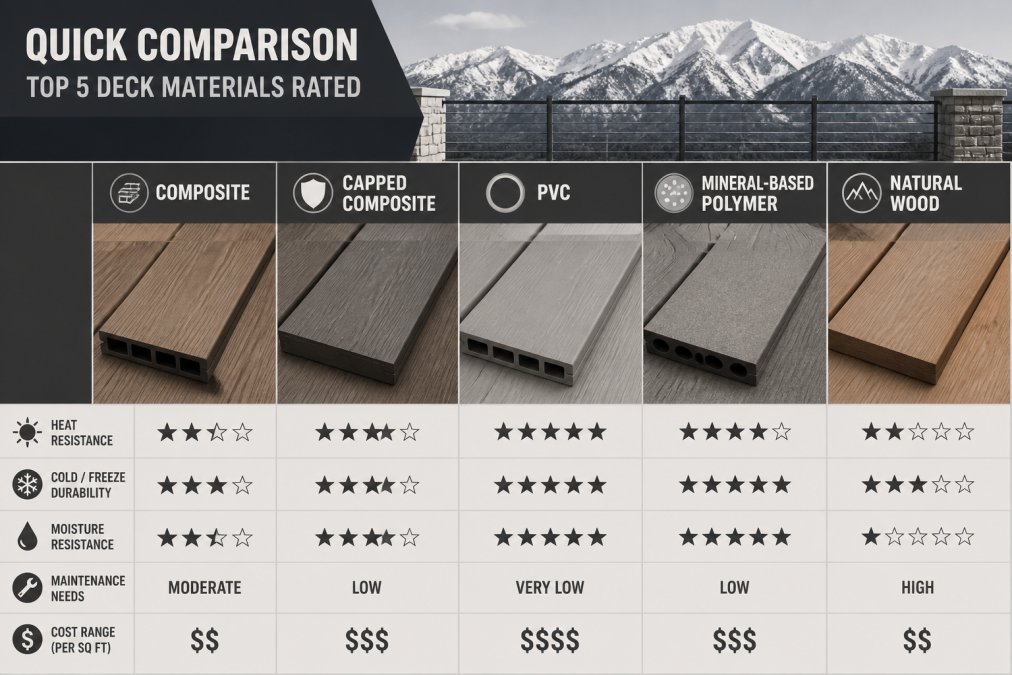
Quick Comparison: Top 5 Deck Materials Rated
| Material | Best For | Snow Load Strength | Thermal Stability | Maintenance Level |
|---|---|---|---|---|
| Trex Composite | Most homeowners | Excellent | Very Good | Minimal |
| TimberTech Advanced PVC | High sun exposure | Excellent | Excellent | Minimal |
| Fiberon Paramount PVC | Natural aesthetics | Excellent | Very Good | Minimal |
| Dekorators Voyage | Extreme temperature swings | Outstanding | Outstanding | Low |
| Aspire Pavers | Modern elevated decks | Excellent | Very Good | Minimal |
1. Trex Composite: Durability Meets Low Maintenance
Trex Composite stands as the top choice for most homeowners in high-altitude environments. Made from 95% recycled materials, this composite decking resists fading, staining, mold, and the moisture absorption that destroys wood-grain alternatives. At Next Level Exteriors, Trex Pro Certification means we understand how this material handles Utah's specific climate stressors.
What makes Trex work here: The board density and engineered structure provide excellent snow load capacity without the warping issues that plague softer materials. Thermal expansion remains minimal through temperature fluctuations, and the capped composite surface sheds moisture rather than absorbing it. You won't sand, stain, or seal this deck every few years.
The trade-off is upfront cost. Trex runs higher than entry-level materials, but the 25+ year lifespan and zero maintenance requirements make the math work. We recommend this for any homeowner who wants to install once and forget about it.
2. TimberTech Advanced PVC: Superior Moisture and Thermal Resistance
TimberTech Advanced PVC takes synthetic decking a step further with cellular PVC technology engineered specifically for extreme climates. This 100% synthetic material doesn't absorb moisture, which matters enormously in a region where freeze-thaw cycles are relentless.
How cellular PVC handles thermal stress: The Wasatch Front experiences seasonal temperature swings of 80+ degrees, from below freezing in winter to 90+ degrees in summer sun. Standard composite materials expand and contract with these swings, creating stress on fasteners and substructure connections. TimberTech's cellular PVC structure has a lower coefficient of thermal expansion than wood-fiber composites, meaning boards move less as temperatures shift.
Moisture absorption is the mechanism that amplifies thermal stress. When a material absorbs water during spring snowmelt or rain, that moisture expands the board. Then, as the board dries in summer heat, it contracts. This wet-dry-wet cycle compounds the thermal expansion-contraction cycle, creating a double stress on the structure. TimberTech's non-porous cellular core eliminates moisture absorption entirely, so the only expansion-contraction happening is from temperature change alone, a significantly smaller movement.
High-altitude UV protection specifics: At 5,000+ feet elevation, UV radiation intensity increases approximately 8-10% per 3,000 feet of elevation gain. The Wasatch Front's clear, dry air and high number of sunny days (around 300 annually) intensify this exposure. This prevents the color fading and surface degradation that occurs with standard composites over 10-15 years.
Structural performance under snow load: The cellular structure provides excellent strength-to-weight ratio. Boards remain rigid under the heavy snow loads typical of higher elevations (some areas require decks rated for 50+ pounds per square foot). The material doesn't soften in heat or become brittle in cold, maintaining consistent structural properties across the full seasonal temperature range.
Installation and fastener considerations: TimberTech's lower thermal expansion means fastener spacing can follow tighter tolerances than with wood-fiber composites. However, the material still requires stainless steel or coated fasteners to prevent corrosion and fastener-induced stress points. We use engineered spacing calculations that account for the specific thermal expansion coefficient of TimberTech, ensuring fasteners don't over-constrain the boards as temperature changes.
The limitation: Regional availability. Not every local supplier stocks TimberTech Advanced PVC, which can complicate sourcing and extend installation timelines. Lead times from regional distributors typically run 2-4 weeks. For homeowners prioritizing durability in high-sun or extreme-temperature situations, the material cost premium is justified by the extended lifespan and minimal maintenance, but project planning must account for procurement lead time.
3. Fiberon Paramount PVC: Strength Against Heavy Snow Loads
Fiberon Paramount PVC brings multi-chromatic technology that mimics exotic hardwoods while delivering synthetic durability. The slip-resistant surface technology matters in Utah winters, a frosted deck surface prevents the ice-skating effect.
Structural performance: No organic material content means zero rot risk, which eliminates the primary failure point for traditional lumber. The board density handles heavy snow loads with confidence. Mold and mildew resistance keeps the surface clean without power washing every season. The earth-tone finish options work with most architectural styles.
Installation requires specific hardware designed for PVC expansion rates. Standard deck fasteners can cause stress points that lead to cracks. We use engineered installation hardware and spacing calculations that account for the thermal expansion characteristics of PVC in extreme temperature swings.
4. Dekorators Voyage: Minimal Thermal Expansion for Extreme Temperature Swings
Dekorators Voyage uses proprietary mineral-based composite technology engineered specifically for climates with extreme seasonal temperature variation. If thermal expansion and contraction are your primary concern, and they should be in the Wasatch Front, this material minimizes those stresses.
The advantage is straightforward: Very low thermal expansion means less stress on fasteners, substructure, and board connections. Boards stay flatter and more stable through 80-degree temperature swings. The high-traction surface prevents slipping in wet or icy conditions. Strength-to-weight ratio exceeds traditional composites, which matters for elevated decks or structures with load limitations.
Availability presents the main challenge. Dekorators Voyage isn't stocked by every regional supplier, and limited local inventory can extend procurement timelines.
This is the material we recommend for homeowners with sloped terrain or structural constraints where board stability directly impacts safety. The minimal thermal expansion reduces the risk of board lifting or separation in freeze-thaw cycles.
5. Aspire Pavers: Modern Alternative for Elevated Decks
Aspire Pavers represents a different category entirely, composite pavers designed for elevated deck surfaces rather than traditional board construction. Made from 95% recycled post-consumer materials, these pavers snap together in a modular system that eliminates hidden fasteners.
The advantage for Wasatch Front applications: Individual pavers can be replaced if damage occurs, rather than replacing an entire board section. The lightweight design works well for rooftop decks or elevated structures where load distribution matters. The stone-like aesthetic appeals to homeowners seeking modern design over traditional wood-grain appearance.
Installation complexity increases compared to traditional decking. The substructure must be engineered to support the specific weight distribution of a paver system, and spacing calculations account for thermal movement differently than board decking. This isn't a DIY-friendly option, professional installation ensures the substructure handles Utah snow loads correctly.
How to Choose the Right Material for Your Wasatch Front Deck
Selecting the right material from the best deck materials for Wasatch Front climate requires evaluating five factors specific to high-altitude climates, plus understanding the local site conditions that most homeowners overlook.
Evaluate your site conditions and soil characteristics first. South-facing decks with minimal shade experience intense UV exposure; TimberTech Advanced PVC handles this better than standard composite. Decks in low-lying areas with poor drainage need materials that shed moisture aggressively, which favors capped composite over open-grain alternatives.
But site evaluation goes deeper than sun and drainage. The Wasatch Front's geology and soil composition affect frost line depth and ground stability. Frost lines in the region typically range from 36 to 48 inches depending on elevation and specific location, higher elevations have deeper frost lines.
Ask your contractor: "What is the frost line depth for my specific address, and how does it affect post installation?" This single question separates experienced local contractors from those applying generic installation standards. Similarly, inquire about soil drainage and whether your site has seasonal water accumulation.
Consider your maintenance tolerance and long-term cost. Composite and PVC materials require minimal upkeep, occasional cleaning and no sealing. If you want zero annual maintenance, these synthetic options eliminate the sanding, staining, and sealing cycles that consume time and money.
Account for snow load engineering and local building codes. This is where professional specification matters most. Building codes in the region require decks to handle specific snow loads based on elevation and location. A deck engineered for Salt Lake County's typical snow loads may be undersized for Cottonwood Heights or other higher elevations.
Factor in thermal expansion and fastener strategy. Ask your contractor how they account for thermal expansion in their installation plan.
Review your HOA requirements and local aesthetic guidelines early. Many communities in Salt Lake County have specific aesthetic guidelines or material restrictions. Understanding these constraints before material selection prevents costly redesigns. We handle HOA coordination as part of our process, so material specifications align with approval requirements from the start.
Ask about local sourcing and procurement timelines. Premium materials like TimberTech Advanced PVC and Dekorators Voyage may require 2-4 week lead times from regional distributors. If your project timeline is tight, material availability becomes a practical constraint.
Frequently Asked Questions
What deck materials best handle heavy snow loads in high-altitude climates?
Composite and PVC decking materials with high structural integrity are engineered to withstand significant snow loads. Fiberon Paramount PVC and Dekorators Voyage are specifically rated for heavy snow load capacity. Both materials resist warping and maintain structural stability through extreme temperature fluctuations common in high-altitude regions. Proper substructure engineering and frost line depth calculations are equally important, work with contractors experienced in local snow load requirements to ensure your deck is built to handle regional winter conditions.
How does composite decking durability compare to other materials in UV-intense environments?
Composite decking durability is exceptional in high-UV settings because the material resists fading and color degradation far better than other materials. Trex composite, made from 95% recycled materials, maintains its appearance for decades with minimal maintenance. Composite materials resist UV damage, moisture absorption, and rot. This durability translates to fewer repairs and replacements over the deck's lifespan, making composites cost-effective despite higher upfront investment.
What is the difference between composite and PVC decking for cold climates?
Composite decking contains organic materials that can absorb moisture, while PVC decking is 100% synthetic and completely moisture-resistant. In cold climates with freeze-thaw cycles, PVC's superior moisture resistance prevents ice formation and expansion damage. TimberTech Advanced PVC and Fiberon Paramount PVC both offer better thermal stability and cooler-to-touch surfaces. Composite materials like Trex are still excellent choices but require slightly more attention to drainage design. Both outperform natural wood in freeze-thaw environments.
How do thermal expansion and contraction affect deck material selection?
Materials expand and contract with temperature swings, a critical factor in regions with extreme seasonal variations. Dekorators Voyage uses mineral-based composite technology to minimize thermal expansion, reducing the risk of board warping and fastener stress. PVC materials also offer excellent thermal stability compared to natural wood. Proper installation with adequate spacing between boards and quality fasteners designed for expansion is essential regardless of material choice. Contractors experienced in local climate conditions understand these requirements and engineer decks to accommodate movement safely.
Is pressure-treated lumber a viable option for Wasatch Front decks?
Pressure-treated lumber can be used but requires significantly more maintenance than composite or PVC alternatives. While treated lumber resists rot, it still weathers, fades, and requires regular sealing and power washing. In high-altitude, high-UV environments with freeze-thaw cycles, pressure-treated wood deteriorates faster than engineered composite or PVC materials. For long-term durability and minimal upkeep, composite and PVC options are superior investments.
Plan your project with Jake
Share your project type, location, scope and timing. Jake confirms an on-site estimate after your callback.